
5kW Solar System in Minnesota: Who It Fits and What It Makes
Five kilowatts is small by Minnesota standards, and that is exactly why it works for efficient homes, small roofs and income-qualified households sized to their usage.
Reviewed by John Ihle, MN Master Electrician (AM005101) · NABCEP-credentialed · iSolar, Saint Paul Park, MN · Last reviewed October 2026
The short answer: A 5kW solar system in the Twin Cities typically produces about 5,750 to 6,500 kWh a year, roughly two-thirds to three-quarters of the average Minnesota home's use. At $3.00 to $3.25 per watt, it costs about $15,000 to $16,250 before incentives. It fits efficient homes, small roofs and income-qualified households using 5,000 to 6,000 kWh a year.
What a 5kW solar system is
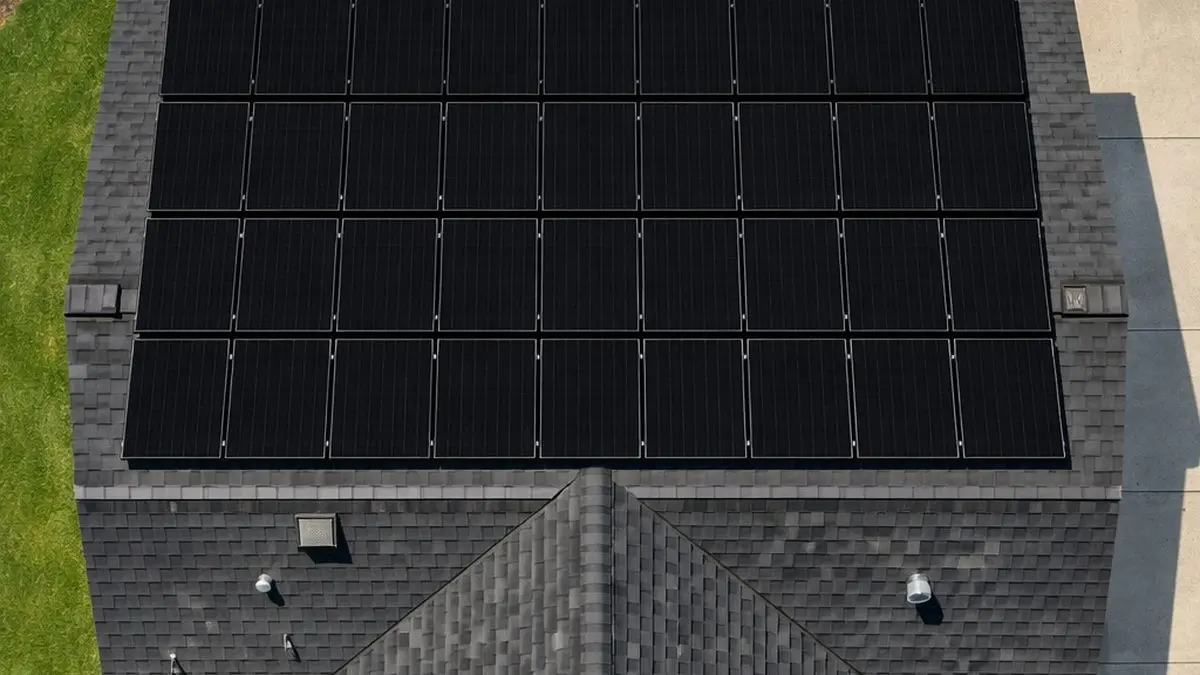
A 5kW solar system is an array with 5,000 watts of panel capacity (DC). With today's 400 to 430 watt residential panels, that is about 12 panels. Using a common 108-cell panel that measures about 66.6 by 44.6 inches, 12 panels cover roughly 250 square feet of roof before setbacks.
In Minnesota that is a small system. Many homes we design land between 7 and 12 kW. But size should follow usage, roof and budget, not a quota. For the right household, 5 kW is the correct answer, not a compromise. If you are comparing sizes, our 10 kW system guide covers the larger end.
5kW solar output in Minnesota
In the Twin Cities, a well-sited array typically produces 1,150 to 1,300 kWh per kW of DC capacity per year. South-ish, unshaded roofs land near the top of that range. East- and west-facing roofs produce roughly 10 to 20% less than south.
| Roof | kWh per kW per year | 5 kW annual output | Average per month |
|---|---|---|---|
| South, unshaded | 1,250 to 1,290 | 6,250 to 6,450 kWh | 520 to 540 kWh |
| Typical Twin Cities range | 1,150 to 1,300 | 5,750 to 6,500 kWh | 480 to 540 kWh |
| East or west face | about 1,030 to 1,160 | 5,150 to 5,800 kWh | 430 to 480 kWh |
Monthly averages hide a big seasonal swing. A Minnesota array makes several times more in June than in December, and snow cover can zero out a few winter days. Under Xcel's monthly net metering, summer surplus is credited and carried forward, so the annual number is the one that matters for your bill.
For context, the U.S. Energy Information Administration reports the average Minnesota household used 712 kWh a month in 2024, about 8,500 kWh a year. A 5kW system covers roughly two-thirds to three-quarters of that average. For a household that uses less, it can cover most or all of it.
Who a 5kW system fits
- Efficient homes. Gas heat, gas water heater, LED lighting, newer appliances and no EV. These homes often use 5,000 to 7,000 kWh a year.
- Small or chopped-up roofs. Townhomes, Cape Cods and homes with dormers may only have room for 10 to 14 panels on the good faces.
- Budget-first buyers. A smaller system still captures most of the per-kWh value and leaves room to add later.
- Income-qualified households. Xcel's Income-Qualified Solar*Rewards caps system size at your usage, which often lands near 5 kW. More on that below.
Who it usually does not fit: all-electric homes, homes with an EV or heat pump on the way, and anyone trying to offset close to 100% of an average-or-higher bill. Run your own numbers with our solar system size estimator.
5kW solar system cost in Minnesota
National price trackers put Minnesota residential solar around $3.00 to $3.25 per watt installed, before incentives. For 5 kW:
| Item | 5 kW estimate |
|---|---|
| Installed price at $3.00 to $3.25 per watt | $15,000 to $16,250 |
| Federal 25D homeowner tax credit | $0 (ended for systems placed in service after Dec. 31, 2025) |
| Minnesota sales tax on solar equipment | Exempt |
| Added property tax for the system's value | Exempt |
| Xcel Solar*Rewards (standard) | Currently $0.05 per kWh produced for 10 years, about $290 to $325 a year |
One honest caveat: small systems cost more per watt. Permits, utility paperwork, the electrical tie-in, monitoring setup and the crew's trip to your house cost about the same for 12 panels as for 24. In our experience, that pushes the per-watt price of a 5 kW system toward the top of the range or past it. Ask any installer to show you the price per watt alongside the total.
A rough payback picture
Say your 5 kW array produces 6,250 kWh a year. If each kWh offsets roughly 12 cents of Xcel energy charges (about 13 cents summer, 11 cents winter on the standard rate), that is about $750 a year, plus roughly $312 from Solar*Rewards for the first 10 years. On a $15,000 to $16,250 system, simple payback lands around 14 to 15 years before any rate increases. That is inside the 10 to 16 year range we typically see for cash purchases, toward the long end. Our solar payback calculator lets you plug in your own bill.
What about a lease or PPA?
The homeowner federal credit is gone, but a third-party owner (a lease or power purchase agreement provider) can still claim the commercial Section 48E credit and may pass part of that through as a lower price. On a small 5 kW system, read the escalator, the term and the buyout terms closely, and compare the lifetime cost against simply buying. Our lease vs. buy comparison walks through the math.
Income-qualified sizing: where 5 kW shines
Xcel's Income-Qualified Solar*Rewards program pays an up-front incentive of $3.00 per watt to qualifying households: those enrolled in Energy Assistance, Medical Assistance, SNAP, SSI or one of 20+ other programs, who own and live in the home, with the Xcel bill in their name.
The system can be sized to produce up to 120% of the last 12 months of usage. A rule of thumb is that the maximum size in kW is about your yearly kWh divided by 1,000. A household using 5,000 kWh a year can go to about 5 to 6 kW.
- 5 kW x $3.00 per watt = $15,000 up front from Xcel.
- That can cover most or all of a 5 kW installation at typical Minnesota pricing.
- Minneapolis homeowners may also qualify for the city's Green Cost Share program for related upgrades.
iSolar is taking 2027 sign-ups now, with a December 31, 2026 deadline. Details and a full eligibility list are on our Income-Qualified Solar*Rewards page.
Electrical details on a small system
A 5 kW array is easy on your electrical system, but older services still need a look:
- 200-amp panel, 200-amp main. The NEC's 120% busbar rule (705.12 in the 2023 edition) allows up to a 40-amp solar backfeed breaker. A 5 kW system needs a 25 to 30 amp breaker, so it usually fits.
- 100-amp panel, 100-amp main. The same rule allows only 20 amps of backfeed, which is too small for 5 kW. The usual fixes are a line-side tap or a panel upgrade.
- Inverter choice. Microinverters make it simple to add panels later, one at a time. A string inverter can be sized with headroom if you plan to expand.
Thinking about 5 kW? Get a usage-based design
The right size comes from your last 12 months of Xcel bills and your roof, not from a package deal. Send us a bill and we will design to your usage, confirm the current Solar*Rewards rate, and tell you honestly whether 5 kW or something bigger makes more sense. Request a free quote.
Sources
Frequently asked.
How much power does a 5kW solar system produce in Minnesota?
In the Twin Cities, a 5 kW array typically produces about 5,750 to 6,500 kWh a year. Unshaded south-facing roofs land near the top of that range, and east or west roofs produce roughly 10 to 20 percent less.
How much does a 5kW solar system cost in Minnesota?
At typical Minnesota pricing of $3.00 to $3.25 per watt, a 5 kW system runs about $15,000 to $16,250 before incentives. Small systems often price toward the top of the range because permits and electrical work are fixed costs.
How many solar panels is 5kW?
About 12 panels using today's 400 to 430 watt residential modules. Those panels need roughly 250 square feet of usable roof, plus required fire-code setbacks.
Is a 5kW solar system enough to power a house?
It covers most of the usage for an efficient, gas-heated home that uses 5,000 to 6,500 kWh a year. The average Minnesota home uses about 8,500 kWh a year, so a 5 kW system covers roughly two-thirds to three-quarters of a typical bill.
Can I add more panels to a 5kW system later?
Yes, especially with microinverters. Plan for it at the start by leaving roof space and electrical capacity, because adding panels later requires new permits and utility paperwork and usually costs more per watt.
Does a 5kW system qualify for Xcel Solar*Rewards?
Yes, if you are an Xcel customer and the system is sized at or below 120 percent of your annual usage. Standard Solar*Rewards currently pays $0.05 per kWh for 10 years, and capacity is limited each year.


Have a question we haven't covered?
Talk to a local iSolar expert — free, no pressure. Call (651) 565-1140.