
Community Solar vs. Rooftop Solar in Minnesota: Which Fits You?
A community solar subscription and panels on your own roof both lower your bill, but one is a rental and the other is an asset. Here's how Minnesota's programs actually compare.

Reviewed by John Ihle, MN Master Electrician (AM005101) · NABCEP-credentialed · iSolar, Saint Paul Park, MN · Last reviewed October 2026
The short answer: Community solar is a subscription: you get a bill credit and pay a developer for part of it, with modest savings and no panels. Rooftop solar costs about $3.00–$3.25 per watt upfront but keeps all the production value, with payback commonly 10–16 years. Renters and shaded roofs fit community solar; homeowners with good roofs usually save more by owning.
Two very different ways to "go solar"
Minnesota was the first state in the country to launch a community solar garden program, back in 2013. That's why your mailbox fills up with subscription offers and door knockers ask whether you'd like "solar without panels." Meanwhile, rooftop solar companies (us included) want to put panels on your house.
Both are legitimate. They're also completely different products:
- Community solar is a subscription. A private developer owns a solar array somewhere in your utility's territory. You subscribe to a share of its output and receive a monthly credit on your electric bill. You pay the developer for that subscription.
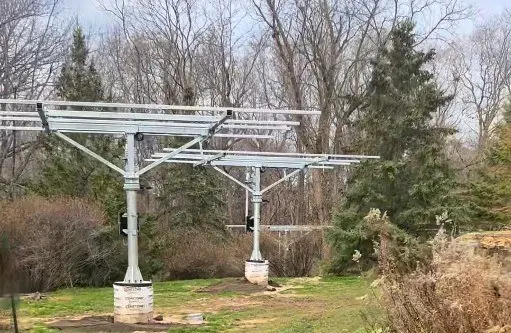
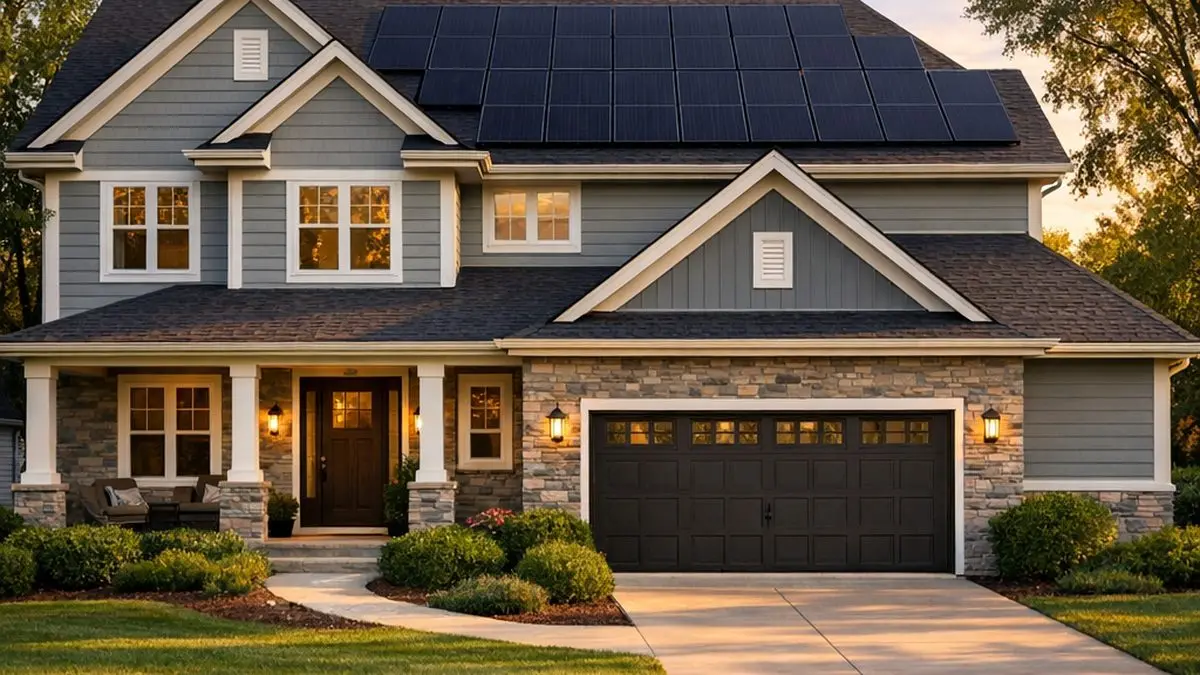
- Rooftop (or ground-mount) solar is ownership. The system sits on your property, you pay for it with cash or a loan, and you keep the value of every kilowatt-hour it produces for the life of the equipment.
One rents a slice of savings. The other buys an asset. The right choice depends on whether you own a suitable roof, how long you'll stay, and how much paperwork you're willing to read.
How Minnesota community solar works now
The program has changed, and older articles are out of date. According to the Minnesota Department of Commerce:
- Gardens in Xcel territory built before 2024 stay in Xcel's Solar*Rewards Community program, created under the 2013 law.
- Gardens in Xcel territory that started development in 2024 or later go through Commerce's Low- and Moderate-Income Accessible program, created by a 2023 law. In 2026 it was renamed the Melissa Hortman Community Solar Garden Program.
- Outside Xcel territory, any community solar is run by the local co-op or municipal utility, which sets its own credit rates and subscription costs.
- You can only subscribe to a garden in your own electric service territory.
Under the newer program, Commerce says the subscription cost, including all fees, can't exceed the value of your bill credit. Income-eligible households pay no more than 90% of the credit's value, which effectively guarantees them savings. Residential subscribers can't be charged an exit fee, operators can't run a credit check, subscriptions can move with you within Xcel's Minnesota territory, and operators must give you a standardized Contract Disclosure Form before you sign.
Credit rates are set as a percentage of average retail electric rates and updated annually, so savings can change over time.
What older and outside-Xcel contracts can look like
Many existing community solar subscriptions were sold under the legacy rules, and some utilities outside Xcel run their own programs. The Minnesota Attorney General's office warns that these subscriptions are typically long-term commitments, often 25 years. Its guidance notes:
- Costs range from a single upfront payment of thousands of dollars to monthly payments around $100.
- Monthly contracts may include a price escalator that raises your rate a set percentage each year.
- Production estimates are developer models and may not hold up in Minnesota weather.
- Ending a contract early typically means a penalty that can be expensive.
- If the developer sells the renewable energy credits to the utility, you may not be getting the clean-energy claim you think you're buying.
The AG's advice is to judge the cost you're committing to without counting on bill credits, and to read the entire agreement. We'd add: don't sign on a porch.
Side-by-side: community solar vs. owning rooftop solar
| Community solar subscription | Owned rooftop solar | |
|---|---|---|
| Upfront cost | Often none under the newer program; some legacy offers required upfront payment | Roughly $3.00–$3.25 per watt; about $21,000–$22,750 for 7 kW |
| Who it fits | Renters, condo owners, shaded or unsuitable roofs | Homeowners with a sound, mostly unshaded roof or yard |
| Typical savings | A share of the bill credit; income-eligible households pay no more than 90% of the credit under the Commerce program | The full value of production, typically offsetting most of a home's annual usage when sized to fit |
| Contract or term | Subscription; legacy contracts often 25 years | No ongoing contract with an installer if paid cash or financed with a loan |
| If you move | Portable within Xcel's Minnesota territory under the newer program | Stays with the house and usually transfers to the buyer |
| Incentives | Built into the credit structure | Minnesota sales tax and property tax exemptions; Xcel Solar*Rewards for eligible systems |
| Maintenance | Developer's responsibility | Yours, though there's very little; warranties cover the equipment |
| Payback | No payback; savings are monthly and modest | Commonly 10–16 years for cash purchases, then the remaining equipment life is savings |
The money difference, in plain terms
A community solar subscriber typically keeps a slice of the credit, the gap between the credit and what they pay the developer. It's real money, but it's modest by design. The developer keeps the rest to pay for the array and earn a return.
A rooftop owner keeps all of it. A 10 kW Twin Cities system producing roughly 12,000 to 12,900 kWh a year offsets electricity that costs about 14 to 16¢ per kWh all-in on Xcel. That's roughly $1,700 to $2,000 of value per year at today's prices, against an upfront cost of about $30,000 to $32,500 before Minnesota incentives. After payback, quality panels keep producing for decades, typically losing only about 0.25 to 0.5% of output per year.
Keep in mind there's no longer a federal homeowner tax credit for systems installed after December 31, 2025. That stretched rooftop payback, but it didn't change the core trade-off: ownership costs more upfront and returns more over time. Our solar payback guide walks through the math in detail.
Who should choose which
Community solar usually makes sense if you:
- Rent, or own a condo or townhome without control of the roof.
- Have a heavily shaded or north-facing roof, or a roof that needs replacing soon and no budget to do both.
- Plan to move within a few years and don't want to sell a house with a system you're still paying off.
- Qualify as income-eligible and can lock in savings with no upfront cost.
Rooftop solar usually makes sense if you:
- Own a home with a reasonably sound, mostly unshaded roof (or room for a ground mount).
- Plan to stay at least long enough to reach payback, or want the home-value bump when you sell.
- Want to add a battery for outage backup. Community solar can't keep your lights on.
- Are income-qualified and an Xcel customer. Xcel's Income-Qualified Solar*Rewards pays $3.00 per watt upfront, which can make ownership far more affordable than a subscription.
Not sure where your roof lands? Our is my house ready for solar check takes a few minutes.
Checklist before you sign either one
- Community solar: get the Contract Disclosure Form, confirm whether you're billed through Xcel or the operator, ask about every fee and the term length, and confirm what happens if you move or want out.
- Rooftop: get the price per watt, the production estimate and the warranty terms in writing, and compare at least two bids. Our solar bid checklist lists what should be in every proposal.
- Either way: ignore same-day deadlines and "the program is closing" pressure. Minnesota's consumer guidance specifically warns about high-pressure sales tactics.
See what owning would look like
If you own your home, it's worth seeing a real rooftop number before you sign a 25-year subscription. Try our roof solar estimator, or request a quote, and we'll tell you honestly if your roof is a better fit for community solar instead.
Sources
Frequently asked.
Is community solar worth it in Minnesota?
It can be, especially for renters, condo owners and homes with poor roofs. Savings are modest because you keep only part of the bill credit. Under the newer Commerce program, total costs can't exceed the credit, and income-eligible households pay no more than 90% of it.
How long are community solar contracts in Minnesota?
The Minnesota Attorney General's office says subscriptions are typically long-term, often 25 years. Terms vary by garden and program, so read the Contract Disclosure Form and the full agreement before signing.
Can renters get solar in Minnesota?
Yes. Community solar gardens are designed for people who can't put panels on their own roof, including renters. You can subscribe only to a garden in your own electric utility's service territory.
Can I cancel a community solar subscription?
Under the newer Commerce program, residential subscribers can't be charged an exit fee. Older and non-Xcel contracts may carry early termination penalties, which the Attorney General's office warns can be expensive.
Do I save more with rooftop solar or community solar?
Over the long run, owning a rooftop system usually saves more because you keep all the production value, but it costs more upfront. A 10 kW Twin Cities system can offset roughly $1,700 to $2,000 of electricity a year at current Xcel prices.
Can I have both community solar and rooftop solar?
It's possible in some cases, but most homeowners pick one. Combining them can push you past what your usage justifies, so check your utility's rules and your subscription's sizing limits first.

Have a question we haven't covered?
Talk to a local iSolar expert — free, no pressure. Call (651) 565-1140.