
Sense Energy Monitor With Solar: Is It Worth It?
Sense promises to name every appliance from two sensors. Here's what it really detects, how its solar sensors must be placed, and when your inverter app already has you covered.
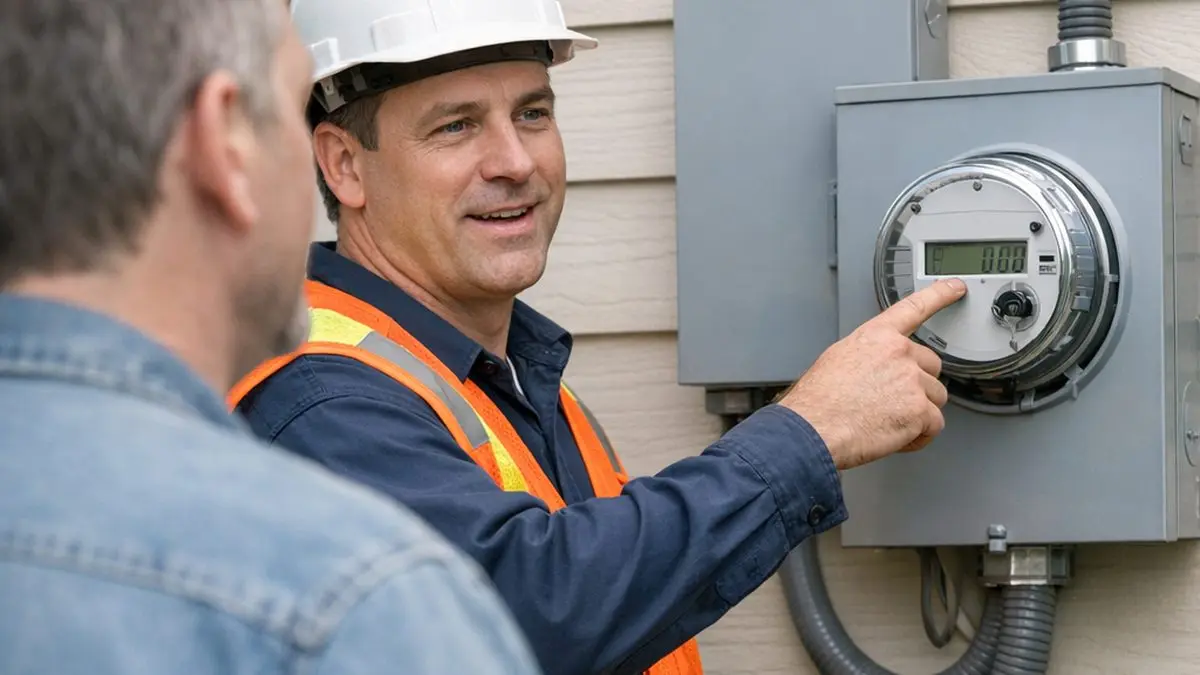
Reviewed by John Ihle, MN Master Electrician (AM005101) · NABCEP-credentialed · iSolar, Saint Paul Park, MN · Last reviewed October 2026
The short answer: The Sense energy monitor ($299, or $349 for Sense Solar) clamps sensors on your main service and uses machine learning to identify appliances. It spots big loads like dryers and refrigerators, but Sense says TVs, computers and lights may never be identified. For solar homes it's a good real-time view of usage and export, not a replacement for your inverter's monitoring.
What the Sense energy monitor does
The Sense energy monitor is a small box that mounts inside your electrical panel, clamps current sensors around your main service conductors, and sends whole-home usage to an app in real time. Its signature feature is that it tries to identify individual appliances from those two main sensors alone, using machine learning on each device's electrical "signature." Sense says it analyzes changes in electrical magnitude, phase and frequency to isolate those patterns.
That's a different approach from circuit-level monitors, which put a sensor on each breaker. Sense watches the whole house and infers what's running. When it works, it's impressive. When it doesn't, you have a good whole-home meter with a list of "unknown" loads. Here's what to expect, especially if you already have solar.
Sense models and prices
Sense currently lists three versions on its site, each with no subscription fees:
- Sense, $299: the base model for homes without solar.
- Sense Flex, $349: the monitor plus an additional pair of sensors for a second measurement point.
- Sense Solar, $349: monitors home energy use and solar production; it includes a second set of two current sensors for the solar circuit.
All of them install in your electrical panel. Sense's own product page says installation should be done by a licensed electrician, and the monitor is listed by ETL/Intertek for installation inside a panel. That matters: the main lugs in a residential panel are energized even with the main breaker off.
Device detection: what's realistic
This is where Sense reviews split. Sense's help center is candid about it:
- Detection takes time. Sense has to see a device run multiple times in a consistent way before it labels it.
- Some devices show up quickly; Sense names refrigerators and dryers as examples.
- Others, like TVs, computers and lights, "may take longer or may not be individually identified at all."
- In Sense's words, detection is "not perfect," and results depend on power quality, how consistently you use devices, and overlapping signals from similar appliances.
Sense suggests using compatible smart plugs to track key devices and manually adding devices you know about.
In October 2025, Sense added a data-driven detection method alongside its existing models. At launch it detects solar generation, variable-speed heat pumps, and Level 1 and Level 2 EVs, and Sense says it needs about 24 hours of data to start identifying those device types. Two caveats from the same article: multiple EVs or heat pumps of the same type appear as a single device, and during the first day of solar detection the data may look off or even show negative wattage.
Our take from the electrical side: big, distinct loads such as a dryer, well pump, water heater, EV charger and air conditioner are what any whole-home monitor sees best. If what you really want is a per-circuit breakdown of every load, a circuit-level monitor gives you that directly instead of by inference.
Sense solar monitoring: CTs and placement
Sense Solar adds a second pair of current sensors that clamp around the conductors carrying your solar output. With both pairs in place, the app can show production, consumption and net grid flow on one screen. Sense's October 2025 update also lets it identify solar automatically even without the extra hardware, but dedicated solar sensors measure production directly rather than inferring it.
The installer's details that make or break the data:
- Mains sensors must see grid flow. On many solar homes, the solar connects through a backfeed breaker in the main panel; on others it's a line-side tap ahead of the main breaker. As with any whole-home monitor, the main sensors need to sit where they measure what's flowing to and from the utility, and the solar sensors on the solar conductors. Get it backward and the app double-counts or shows nonsense.
- Sensor orientation and phase. Current sensors have a direction. A reversed clamp shows production as consumption.
- Wi-Fi in the panel location. Panels in basements or detached garages often have weak signals. Sense includes an antenna with the monitor; where it exits the panel matters, so plan that with your electrician.
Expect small differences between Sense's solar number and your inverter's. They're different meters, measured at different points.
Sense vs your inverter app vs a circuit-level monitor
| Sense Solar | Enphase app (IQ Gateway with CTs) | Emporia Vue 3 | |
|---|---|---|---|
| List price | $349 | Included with an Enphase system; consumption CTs may be extra | $199.99 (16-sensor kit) |
| How it measures | Two main sensors plus two solar sensors; infers individual devices | Production metered at the gateway; consumption CTs on the service | Mains sensors plus one sensor per circuit |
| Device-level detail | Learned over time; not every device | None (whole-home only) | Per circuit, from day one |
| Production accuracy | Good for trends | Revenue-grade production metering (±0.5%, per Enphase) | Good for trends |
| Best for | Curious owners who want to see what's running | Warranty and performance tracking of the array | Owners who want hard numbers by circuit |
For solar owners, the inverter platform remains the system of record. It's what your installer and the manufacturer use for warranty and troubleshooting. Our guide to the Enphase IQ Gateway explains how its production and consumption metering works, and our Emporia Vue review covers the circuit-level alternative.
Is the Sense energy monitor worth it with solar?
Sense is worth it if:
- Your inverter app shows production only, with no consumption data, and you want to see self-use and grid export in real time.
- You're trying to cut a high bill and want to watch what happens when the well pump, dehumidifier or electric water heater kicks on. Our posts on what uses the most electricity and refrigerator electricity use give you the loads to look for.
- You're planning an EV or heat pump and want baseline data before sizing more solar or a battery.
It's probably not worth it if you already have consumption CTs on your Enphase or SolarEdge system and mainly want to confirm the array is working; you already have that data. If your concern is a system that's stopped reporting, start with our monitoring offline fix guide instead.
Using the data before you add solar or a battery
The most practical use we see is baseline data. A few months of Sense history shows your evening load, your overnight floor and how big your winter peaks are. That's exactly what matters if Xcel's optional time-of-use rate reaches your meter, or if you're deciding between an essential-loads battery and whole-home backup. Bring screenshots of that history to your solar consultation; it beats guessing from monthly bills.
Have an electrician install it right
Whichever monitor you choose, the install is a short piece of panel work that determines whether the data is any good. iSolar's electrical team installs monitors and consumption CTs on solar and non-solar homes and can tell you whether your existing inverter already gives you what you need.
Sources
- Sense — Find the right energy monitor for your home (models and prices)
- Sense — Product details (included sensors, installation, ETL listing)
- Sense Help Center — Devices: how Sense detects devices in your home
- Sense Help Center — What's new in device detection (October 2025)
- Enphase — IQ Gateway data sheet
- Emporia Energy — Emporia Vue 3 product page and specifications
Frequently asked.
How much does a Sense energy monitor cost?
Sense lists the base monitor at $299 and Sense Solar and Sense Flex at $349, with no subscription fees. Professional installation by an electrician is extra.
Does Sense work with solar panels?
Yes. Sense Solar includes a second pair of current sensors for the solar circuit so it can show production, consumption and grid export. Sense also says its 2025 update can identify solar automatically without the extra sensors.
How long does Sense take to detect devices?
It varies. Sense says it needs to see a device run multiple times in a consistent way, and its newer detection for solar, heat pumps and EVs needs about 24 hours of data to start. Some small devices may never be identified.
Can I install a Sense monitor myself?
Sense recommends a licensed electrician. The monitor installs inside your electrical panel, where the main lugs stay energized even with the main breaker off.
Is Sense or Emporia better?
Sense infers individual devices from the main sensors; Emporia Vue measures each circuit directly with its own sensor. If you want guaranteed per-circuit numbers, a circuit-level monitor is more direct.
Do I need Sense if my solar app shows consumption?
Probably not. If your inverter system already has consumption CTs, you have whole-home usage, production and export data. Sense mainly adds device-level detection.

Have a question we haven't covered?
Talk to a local iSolar expert — free, no pressure. Call (651) 565-1140.