
Solar Shingles vs. Solar Panels in Minnesota: An Honest Comparison
Solar shingles look great on paper and on the roof. Here's how they stack up against panels on cost, power, repairs and Minnesota winters.
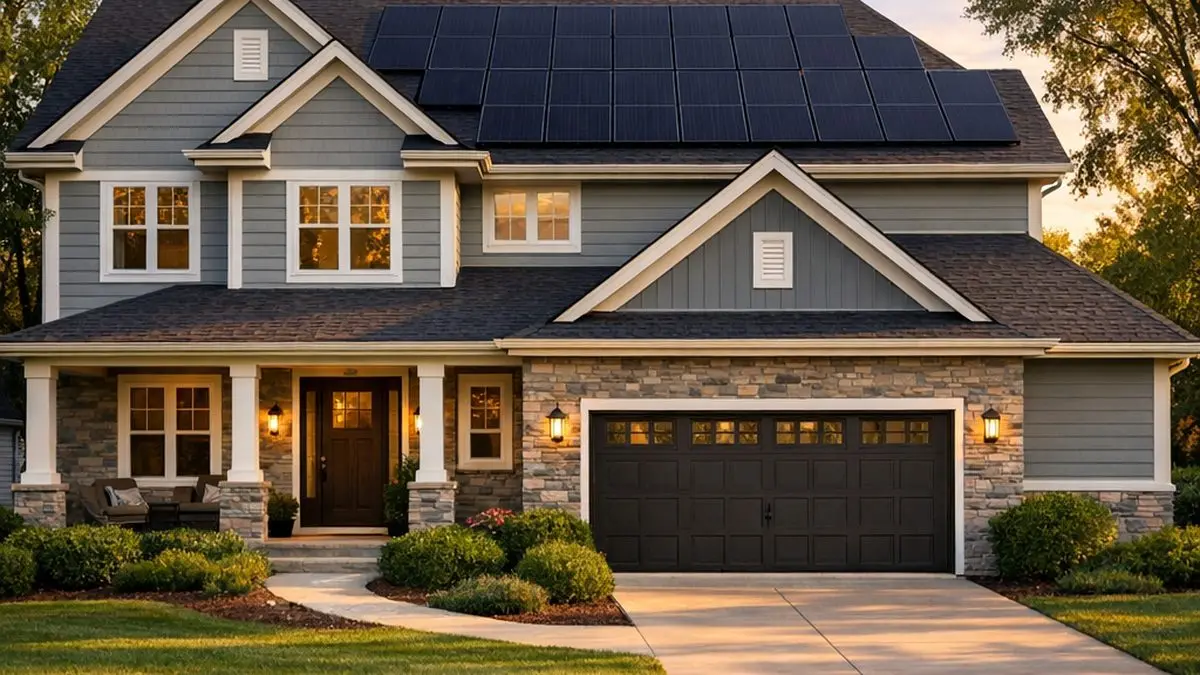
Reviewed by John Ihle, MN Master Electrician (AM005101) · NABCEP-credentialed · iSolar, Saint Paul Park, MN · Last reviewed October 2026
The short answer: For most Minnesota homes, solar panels win on cost and repairability. Panels run about $3.00–$3.25 per watt here; solar shingles are priced as a whole roof, are less efficient (about 14–18%), and have fewer local installers. Shingles make sense mainly when you're replacing the entire roof now and appearance matters most.
The honest short answer
Solar shingles are a real product, and they look sharp. For most Minnesota homeowners, though, a new conventional roof plus rack-mounted solar panels produces more power per dollar, is easier to repair, and is easier to service decades from now. Shingles make the most sense when you need a full roof replacement anyway, care a lot about appearance, and accept a higher price per watt and a smaller pool of installers.
Below is how the two compare on cost, output, roof timing, repairs and Minnesota winters.
| Factor | Solar panels on a new or existing roof | Solar shingles (building-integrated) |
|---|---|---|
| What it is | Framed modules on rails above the roof | Solar cells built into roofing products that replace shingles |
| Typical efficiency | Up to about 24% for current residential panels | About 14–18% (This Old House) |
| Power per roof area | Roughly 20 W per sq ft of panel | About 17 W per sq ft of solar shingle (GAF: 1.7 kW per roofing square) |
| Installed price | Commonly $3.00–$3.25/W in Minnesota before incentives, plus roofing if needed | Rarely quoted per watt; priced as a whole roof |
| Roof replacement | Panels come off and go back on (detach and reset) | The solar is the roof |
| Repairs | Swap a panel or microinverter | Specialized; depends on the manufacturer and trained installers |
| Installer pool | Large | Small, brand-specific |
Cost per watt: why the comparison is tricky
Solar panel pricing is easy to compare. National price trackers put Minnesota residential solar at about $3.00–$3.25 per watt before incentives, so a 7 kW system is roughly $21,000–$22,750. If you need a new roof, that's a separate line item.
Solar shingles are sold as a roof, and manufacturers rarely publish a per-watt price. Here's what public sources say:
- GAF, which makes the nailable Timberline Solar shingle, says on its product page that a Timberline Solar roof is often comparable in price to a new roof plus rack-mounted panels, with actual cost depending on roof size, slope, shade and sun.
- This Old House puts a typical solar shingle installation around $55,000, compared with $24,000–$36,000 for a 20- to 30-panel conventional system. Those aren't identical system sizes, but the gap is the point.
The fair way to compare is not "shingles vs. panels." It's solar shingle roof vs. new asphalt roof + solar panels, at the same kilowatts. Ask any solar-roof seller for three numbers: total price, kW-DC of solar, and the square footage of non-solar roofing included. Then divide. If the shingle quote is only competitive because it bundles a roof you don't need yet, it isn't competitive.
One more cost note: the 30% federal homeowner credit ended for systems completed after Dec. 31, 2025. Some older articles still assume it applies to shingles, and it no longer does for homeowner purchases.
Efficiency and how much power fits on your roof
Shingle cells are smaller and are packed among non-producing edges, flashing and inactive roof sections. GAF rates its newest Timberline Solar ES 2 shingle at 57 watts per shingle, about 30 shingles and 1.7 kW per 100 square feet of roof.
Rough math for a 7 kW system:
- Solar shingles: 7,000 W ÷ 57 W ≈ 123 shingles, about 410 square feet of active solar area.
- Panels: about 17 panels at roughly 410 W each, around 360 square feet.
That difference matters on Minnesota roofs, where fire-code pathways, ridge setbacks, vents and dormers already eat usable space. Shingles also sit flat against the roof deck with less airflow behind them, and solar cells lose some output as they heat up.
Production per installed kW is otherwise similar. A south-facing, unshaded array in the Twin Cities makes roughly 1,250–1,290 kWh per kW per year, and east or west faces make about 10–20% less, whether the cells are in a panel or a shingle.
Roof replacement timing is the real decision
This is where shingles can make sense. If your roof is 20-plus years old and you were going to replace it anyway, a solar roof does the job in one project.
The conventional alternative is just as clean when it's sequenced right: reroof first, then install panels on new shingles. You avoid paying later to remove and reinstall panels. Read re-roofing and solar: time it once, pay once for how we sequence it with our sister roofing company, and see why bundling solar and a new roof pays off.
If your roof has 15-plus good years left, shingles mean tearing off a sound roof to install solar. Panels on the existing roof almost always win in that case. Not sure? Use our is my house ready for solar check.
Repairs and the 25-year question
Ask what happens in year 15 when something fails.
- Panels: A failed panel or microinverter is a standard part. Many companies can diagnose and replace it, including if your original installer is gone. When you reroof down the road, panels come off and go back on; see our detach and reset service.
- Shingles: Replacement depends on that manufacturer's product line still being made and on an installer trained on it. The category is young and has seen turbulence. GAF Energy shut down its San Jose research and manufacturing hub in December 2025 and consolidated production in Texas. Tesla paid a roughly $6 million class-action settlement in 2023 over 2021 Solar Roof price increases on signed contracts.
That isn't a reason to rule shingles out. It is a reason to read the warranty closely, confirm who services it locally, and confirm parts availability. Also note that GAF's product page says its limited warranties don't cover hail damage, so homeowners insurance matters as much as it does for panels.
Snow, ice and hail in Minnesota
Snow: Panels have smooth glass on a raised frame, and snow often slides off in sheets on sunny days. That's good for production but can dump snow on walkways, which is why we talk about snow guards in snow sliding off solar panels. Solar shingles sit flush, and snow behaves more like it does on the rest of the roof.
Ice dams: Neither product causes ice dams. They come from heat escaping into the attic. A flush solar roof can't be lifted to fix a leak the way a panel can be removed, so attic air sealing and insulation are worth doing first. See ice dams and solar panels.
Hail: Most certified panels are tested to withstand 25 mm (1 inch) ice balls at about 23 m/s under IEC 61215. GAF lists UL 2218 Class 4 impact ratings for qualifying Timberline Solar packages. Either way, a severe storm is an insurance claim.
Which should you choose?
- Choose panels if your roof has years of life left, you want the most kWh per dollar, or you want the widest choice of installers and repair options.
- Consider shingles if you're replacing the whole roof now, appearance is a top priority, and the quote holds up on a per-watt basis against a new roof plus panels.
Compare both with real numbers
We install panels and, through Three Rivers Contracting, replace roofs, so we can price a new roof plus panels as one project you can hold up against any solar roof quote. Request a quote and send us the competing proposal; we'll help you compare it line by line.
Sources
Frequently asked.
Are solar shingles worth it in Minnesota?
They can be if you need a full roof replacement now and value a flush look. For most homes with a roof that has years of life left, panels produce more power per dollar and are easier to service. Compare a solar roof quote against a new roof plus panels at the same kilowatts.
How much do solar shingles cost compared to solar panels?
Manufacturers rarely publish per-watt pricing for shingles. This Old House puts a typical solar shingle job around $55,000, versus $24,000 to $36,000 for a 20- to 30-panel system, while Minnesota panel installs commonly run $3.00 to $3.25 per watt. GAF says its solar roof is often comparable to a new roof plus panels.
Are solar shingles less efficient than solar panels?
Generally yes. This Old House cites about 14 to 18 percent efficiency for shingles versus up to about 24 percent for current panels, and GAF's newest shingle yields about 1.7 kW per 100 square feet of roof.
Can you walk on solar shingles or remove them for repairs?
Solar shingles are designed as roofing, but repairs require a trained installer and matching replacement parts from the same manufacturer. Panels can be removed and replaced by most solar service companies.
Do solar shingles work in snow?
Yes, they produce power when uncovered, like panels. Snow tends to stay on a flush solar roof longer than on raised glass panels, which often shed snow in sheets on sunny days.
Is there a tax credit for solar shingles in 2026?
Not for homeowners. The 30 percent federal residential credit ended for systems completed after December 31, 2025. Minnesota's sales tax exemption on solar equipment and property tax exemption for added solar value still apply to qualifying systems.


Have a question we haven't covered?
Talk to a local iSolar expert — free, no pressure. Call (651) 565-1140.