
Breaker Keeps Tripping? 7 Causes and When to Call an Electrician
A breaker that trips once is doing its job. One that keeps tripping is telling you something. Here's how to read the pattern, what you can safely check, and when it's time for an electrician.
Reviewed by John Ihle, MN Master Electrician (AM005101) · NABCEP-credentialed · iSolar, Saint Paul Park, MN · Last reviewed October 2026
The short answer: A breaker keeps tripping for one of a few reasons: too much load on the circuit (the most common, especially space heaters in winter), a short circuit, a ground fault, an arc fault, a motor's startup surge, a loose connection or a worn-out breaker. If it trips with little or nothing running, trips instantly on reset, or feels hot or smells burnt, call an electrician.
Why a breaker keeps tripping: read the pattern first
When a breaker keeps tripping, the timing tells you most of what you need to know. Before you reset it again, note what was running, how long after reset it tripped, and what kind of breaker it is. Standard breakers protect wiring from too much current. GFCI breakers (with a test button) also look for current leaking to ground. AFCI breakers (also with a test button, often labeled) look for arcing.
| What you see | Most likely cause | First step |
|---|---|---|
| Trips after several minutes with a heater, hair dryer or microwave running | Overload | Move a load to another circuit |
| Trips instantly when reset, even with things unplugged | Short circuit or failed breaker | Leave it off; call an electrician |
| Trips when one appliance is plugged in or turned on | Faulty appliance or cord | Unplug it and test the circuit without it |
| GFCI trips after rain, snowmelt or a hard freeze | Moisture in an outdoor or garage outlet | Let it dry; check covers and boxes |
| AFCI trips randomly or with a specific device | Arc fault, damaged wire, or device incompatibility | Unplug devices one at a time; call if it persists |
| Trips when the sump pump, well pump or AC starts | Motor startup surge or failing motor | Have the motor and circuit checked |
| Trips at light load; breaker warm, buzzing or discolored | Worn breaker or loose connection | Stop resetting it; call an electrician |
Cause 1: Overload, the winter space heater problem
Overload is the most common reason a circuit breaker keeps tripping, and in Minnesota it peaks in January. A typical bedroom or living room circuit is 15 amps at 120 volts, which is 1,800 watts. A 20-amp circuit is 2,400 watts. Electricians generally keep continuous loads to about 80% of a breaker's rating, or 12 amps on a 15-amp circuit.
| Load (illustrative) | Watts | Amps at 120 V | Share of a 15 A circuit |
|---|---|---|---|
| Space heater on high | 1,500 | 12.5 | 83% |
| Space heater on low | 750 | 6.3 | 42% |
| Example: 300 W of lamps, TV and chargers | 300 | 2.5 | 17% |
| Heater on high plus that 300 W | 1,800 | 15.0 | 100% |
One heater on high nearly fills a 15-amp circuit by itself. Add a TV, lamps and a laptop and the breaker trips after a few minutes, which is exactly what it should do. The fix is moving the heater to a less loaded circuit, running it on low, or solving the cold room another way. The Department of Energy says electric heaters should be plugged directly into the wall outlet, and if an extension cord is unavoidable, to use the shortest possible heavy-duty cord of 14-gauge wire or larger.
Space heaters also carry fire risk beyond tripped breakers. The U.S. Fire Administration reports portable heaters were only 3% of home heating fires in 2017 to 2019 but 41% of the fatal ones, and it advises keeping anything that can burn at least 3 feet away. For the operating cost side, see how much it costs to run a space heater.
Other Minnesota overload culprits: a block heater and a garage heater on the same circuit, a chest freezer sharing a garage circuit with power tools, and kitchen counters with a toaster oven, kettle and microwave going at once.
Cause 2: Short circuit
A short circuit is a hot conductor touching neutral or another hot conductor, which sends a huge current through the circuit. The breaker trips instantly. Signs include a pop or flash, a burning smell, or black marks on an outlet or plug. If it happens when you plug in one thing, the appliance or its cord is the likely problem. If it trips immediately with everything unplugged, the short may be in the wiring, a device or the breaker. Leave it off and call an electrician.
Cause 3: Ground fault
A ground fault is current leaking to ground through a path it shouldn't take, such as water, a damaged tool or a person. GFCI protection cuts power when it detects this. In Minnesota, GFCI trips spike in spring and fall, when snowmelt, rain and freeze-thaw cycles get moisture into outdoor receptacles, garage outlets and holiday light connections. A sump pump or old freezer with a deteriorating motor can also trip a GFCI. If it trips only when wet, fix the cover or box. If it keeps tripping when dry, find the device causing it.
Cause 4: Arc fault
AFCI breakers look for the electrical signature of arcing. The Electrical Safety Foundation (ESFI) says arc faults come from damaged, overheated or stressed wiring, such as cracked older wire, a nail or screw driven into a cable behind a wall, or overburdened circuits, and that arcing causes more than 30,000 U.S. home fires a year. An AFCI that keeps tripping may be catching a real problem, or reacting to a particular appliance or motor. Unplug devices one at a time to narrow it down. Our AFCI vs. GFCI guide covers nuisance tripping in more detail.
Causes 5 to 7: motors, loose connections and worn breakers
Motor startup surges. Sump pumps, well pumps, air conditioners and garage door openers draw a brief surge when they start. A healthy motor on a properly sized circuit rides through it. A motor with a failing capacitor or worn bearings draws more and may trip the breaker. In Minnesota, a tripped sump pump breaker in April is worth fixing the same day.
Loose or deteriorated connections. A loose terminal heats up, which can trip a breaker or damage it over time. This is more common in older homes, where devices have been changed many times or the wiring is original. If your house has original knob and tube wiring, read our guide to knob and tube wiring in Minnesota.
Worn or defective breakers. Breakers do wear out, especially after many trips. Warning signs: it trips at loads well below its rating, won't stay reset, feels warm, buzzes, or looks scorched. Some older panel brands have known problems with breakers that may not trip when they should, which is a different and more dangerous failure. If you have one, see our post on the Zinsco panel.
How to reset a tripped breaker safely
- Turn off or unplug what was running on that circuit.
- Stand to the side of the panel with dry hands and dry feet.
- Push the breaker handle firmly to OFF first (a tripped breaker often sits in the middle), then back to ON.
- Plug things back in one at a time and watch which one causes the trip.
- If it trips again immediately with nothing connected, stop. Don't hold it on or reset it repeatedly.
Never replace a breaker with a larger one to stop the tripping. The breaker is sized to protect the wire; a bigger breaker lets the wire overheat inside your walls.
When to call an electrician
- The breaker trips instantly on reset or with nothing plugged in.
- You smell burning, see scorch marks, or an outlet or switch is hot.
- The breaker or panel is warm, buzzing or discolored.
- You've redistributed loads and it still trips.
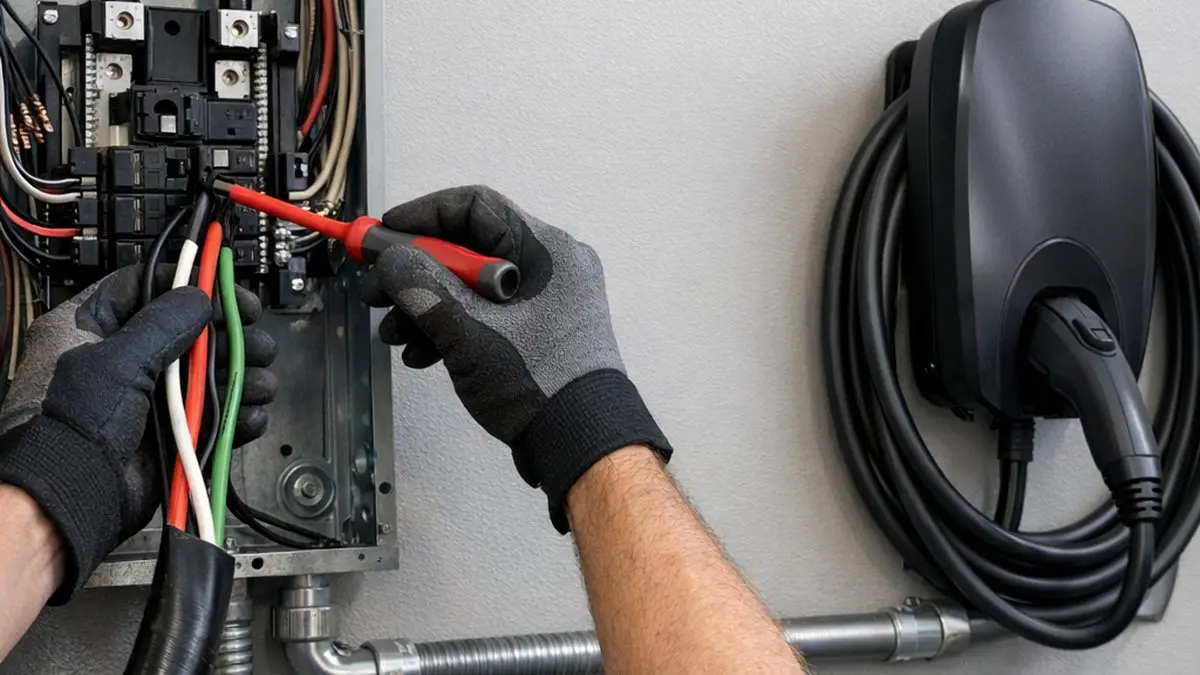
- You're adding a big load such as a heat pump, EV charger or electric heat. Check capacity first with our panel capacity check.
Get the circuit traced and fixed
iSolar's electricians troubleshoot tripping breakers, add dedicated circuits for heaters and appliances, and replace worn breakers and panels under permit. If a breaker keeps tripping at your house, request a service visit and tell us what was running when it went.
Sources
Frequently asked.
Why does my breaker keep tripping with nothing plugged in?
That usually points to a short circuit in the wiring or a device, a ground fault, or a failed breaker. Leave the breaker off and call an electrician rather than resetting it repeatedly.
Can a space heater trip a breaker?
Yes. A 1,500-watt heater draws about 12.5 amps, which nearly fills a typical 15-amp, 120-volt circuit by itself. Add other loads on the same circuit and the breaker trips.
Is it dangerous if a breaker keeps tripping?
The trip itself is the breaker protecting you, but repeated trips signal a problem that needs fixing. Burning smells, hot outlets, scorch marks or a warm, buzzing breaker are signs to stop resetting it and call an electrician.
Can a circuit breaker go bad?
Yes. Breakers can wear out, especially after many trips. A breaker that trips at light loads, won't stay reset, feels warm or looks scorched should be checked and replaced by a licensed electrician.
Can I replace a 15 amp breaker with a 20 amp breaker?
Not unless the circuit wiring is rated for 20 amps. The breaker protects the wire, and oversizing it can let the wire overheat inside the wall.
Why does my GFCI keep tripping when it rains or snow melts?
Moisture is getting into an outdoor or garage receptacle, a cord connection or a fixture. Check that weather-resistant in-use covers are installed and boxes are sealed, and have an electrician look if it trips when dry.

Have a question we haven't covered?
Talk to a local iSolar expert — free, no pressure. Call (651) 565-1140.