
Can a Generator Get Wet? Running One Safely in Minnesota Rain and Snow
Outages come with storms, so your generator will see rain, sleet and drifting snow. Here's what a portable unit can handle, what a standby unit can, and where people get hurt.
Reviewed by John Ihle, MN Master Electrician (AM005101) · NABCEP-credentialed · iSolar, Saint Paul Park, MN · Last reviewed October 2026
The short answer: A portable generator should not run exposed to rain or snow. Generac says never to operate one in wet conditions, and CPSC advises a dry surface under an open canopy at least 20 feet from the house. Permanently installed standby generators are built to run in weather, but you still need to keep snow at least three feet clear of the enclosure.
Can a generator get wet? Portable vs standby
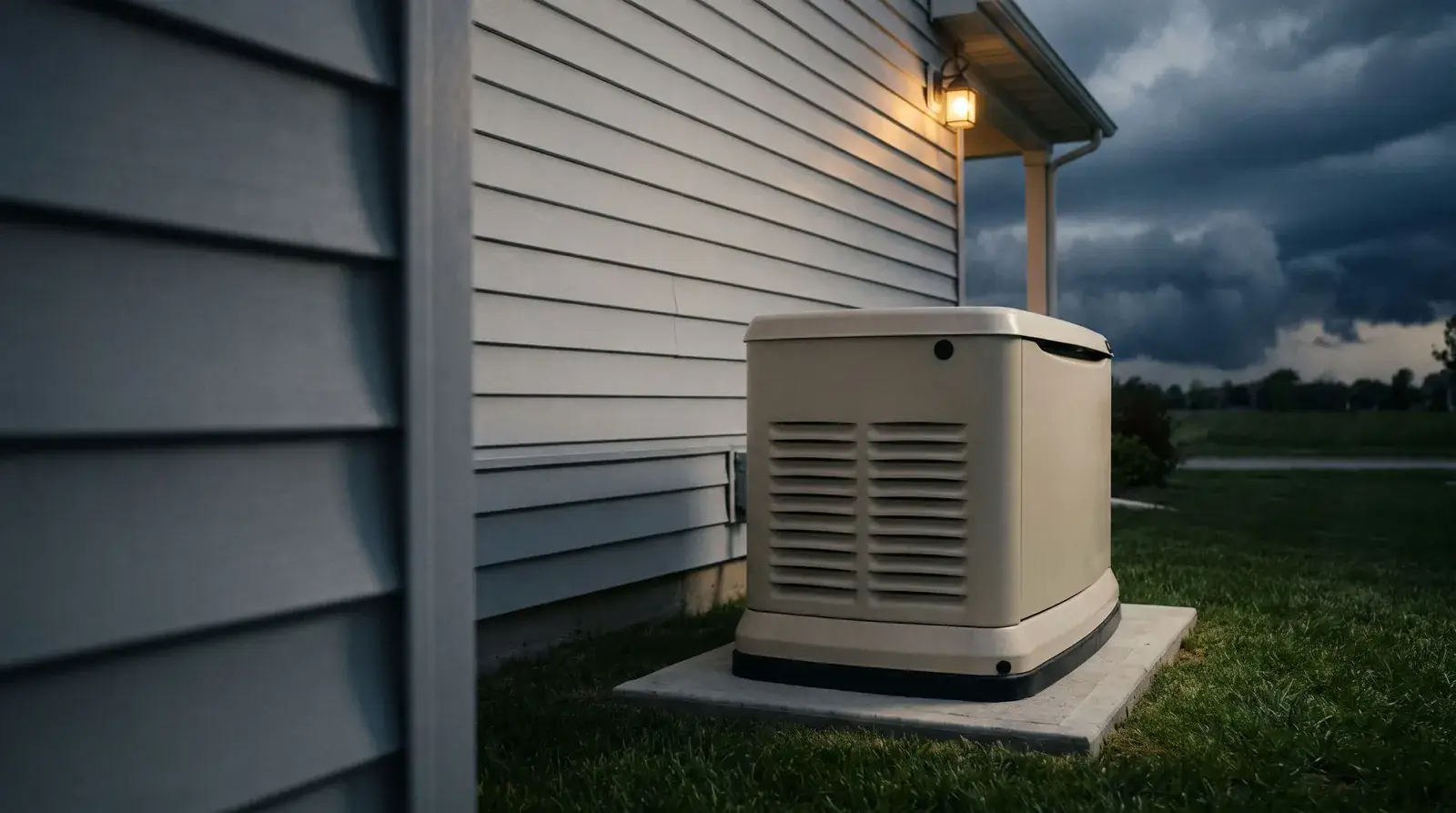
The honest answer to can a generator get wet depends on which kind you own. A portable generator has exposed outlets, an open alternator and a control panel designed for a dry job site. A home standby generator sits in a weatherproof enclosure, is hardwired through a transfer switch and is built to start by itself in a storm.
| Question | Portable generator | Home standby generator |
|---|---|---|
| Run it in rain or snow? | Not exposed. Generac: "NEVER run a generator directly in the rain, snow, or other wet conditions." | Yes. It's designed to run outdoors in weather. |
| Where it sits | Outside, at least 20 feet from the house per CPSC, exhaust pointed away | On a pad at the installer's code-required clearances |
| Main wet-weather risk | Shock at outlets and cords; CO if moved closer to the house to stay dry | Snow or ice blocking intake and exhaust |
| How it connects | Cords, or an inlet box and interlock/transfer switch | Automatic transfer switch |
| What to buy | A purpose-built generator tent or canopy approved by the manufacturer | A cold-weather kit for extreme cold |
Why a wet portable generator is a shock hazard
CPSC puts it plainly: generators "pose a risk of shock and electrocution, especially if they are operated in wet conditions." The outlets on a portable unit put out the same voltage as your wall receptacles, often with your hands, the cord ends and the ground all wet at once.
Two other details matter:
- Dry hands, dry surface. CPSC says to dry your hands before touching the generator and to run it on a dry surface "where water cannot reach it or puddle or drain under it." Snowmelt pooling around the frame counts.
- Cords. Use outdoor-rated extension cords rated for more than the connected load, with no cuts and all three prongs. Keep connections off the ground and out of slush.
The bigger killer isn't shock. CPSC reports that nearly 100 people die in the U.S. each year from carbon monoxide poisoning caused by portable generators. In wet weather people drag the generator into the garage, onto the porch or under a carport to keep it dry, and CPSC specifically warns against all three. Our post on why not to backfeed a generator covers the other common mistake.
Generator in rain: safe placement and covers
If you have to run a portable generator in rain, CPSC's guidance is to operate it "under an open, canopy-like structure on a dry surface," far from windows, doors and vents. In practice that means:
- Pick the spot before the storm. At least 20 feet from the house, downwind of doors, windows and your furnace and dryer vents, on high ground that doesn't collect water.
- Use a cover made for running. A storage cover is for when the generator is off. A running cover or generator tent has to keep rain off the outlets while leaving the exhaust and cooling air completely open. CPSC notes manufacturers may call for an NFPA-rated noncombustible tent, or advise waiting until rain or snow passes. Follow your owner's manual.
- Raise it. A few pavers or a small platform keeps the frame out of puddles.
- Never enclose it. No tarps draped to the ground, no shed, no lean-to against the house.
- Install CO alarms. Battery or battery-backup units on every level, tested monthly.
When you can't meet those conditions, the safe call is to shut it down until the weather passes.
If your portable generator already got soaked
- Shut it off and unplug every cord before touching anything else, with dry hands and dry footing.
- Move it somewhere sheltered and ventilated (not running) and let it dry completely, ideally a day or more.
- Look for water in the outlets, the control panel and the air filter housing. Water in the fuel or oil means service before the next start.
- Test the GFCI outlets with their test buttons before reconnecting loads. If anything trips immediately or smells hot, have it checked rather than forcing it back into service.
Snow, ice and Minnesota cold
Minnesota adds problems warmer states don't have. Blowing snow fills in around a portable unit, and drifts can bury a standby enclosure along the side of a house overnight.
Standby generators
Generac's snowstorm guidance says to keep snow and ice cleared off and away from the enclosure, with no snow piles within three feet of the generator, and to regularly check and clear the intake and exhaust areas. For propane units, Generac warns that tank levels below 35% in extreme cold can disrupt fuel delivery. Cold-weather kits with a battery warmer, oil warmer or intake warmer are available for the coldest sites. Our standby generator winter checklist walks through the rest.
Portable generators
- Clear a path to the generator and keep the exhaust side free of drifts.
- Don't run it in the lee of the house where snow piles up; wind can push exhaust back toward openings.
- Use winter-grade oil and stabilized fuel; see our dual fuel generator guide for propane's cold-weather tradeoffs.
- Clear snow from your furnace and water heater vents too. CPSC calls this out because blocked appliance vents add to CO risk during storms.
The wiring details that prevent shocks
Water is only half the shock story. The other half is how the generator connects to your house.
- GFCI on the generator. The NEC (445.20) requires GFCI protection on the 15- and 20-amp, 125-volt receptacles of portable generators rated 15 kW or less, with a narrow exception for certain floating-neutral units. If your generator's GFCI trips in wet weather, it's doing its job. Don't bypass it.
- Bonded vs floating neutral. Some portable generators bond neutral to ground inside the frame; others don't. Which you need depends on whether you plug cords straight into the generator or feed the house through an interlock or transfer switch. A mismatch can cause nuisance GFCI trips or leave a fault without a clean return path. This is a question for a licensed electrician, not a forum thread.
- Inlet box and interlock. A weather-rated inlet box on the outside wall and a listed interlock or transfer switch keep cords short and connections out of the snow. See our posts on generator inlet boxes and interlock kits.
In Minnesota, connecting a generator to a home's wiring requires an electrical permit. That inspection is a second set of eyes on exactly these details.
Get a generator setup that works in any weather
iSolar's electrical team installs standby generators and portable-generator inlets and interlocks under our Minnesota electrical license, with permits and inspection. Size yours with our generator sizing tool, read more on our generator page, or compare options in generator vs battery for Minnesota outages.
Sources
- CPSC — Winter Storm May Knock Out Power: CPSC Warns of Deadly Carbon Monoxide and Fire Risks (2026)
- CPSC — Safety Alert: Portable Generators
- Generac — Can a portable generator be used in the rain or during a storm?
- Generac — Preparing a home standby generator for a snowstorm
- EC&M — Code Quiz: Unbonded (Floating Neutral) Generators, NEC 445.20
Frequently asked.
Can you run a generator in the rain?
Not exposed. Generac says never to run a portable generator directly in rain or snow. If you must run it in wet weather, CPSC advises an open, canopy-like structure on a dry surface at least 20 feet from the house, and some manufacturers call for a noncombustible generator tent.
Can a generator get wet when it's off?
It should be protected from the elements when not in use to prevent shorting and rust. Let a wet unit dry fully and check outlets and the control panel before starting it.
Is it safe to run a generator in the garage with the door open?
No. CPSC warns against running a portable generator in a garage, on a porch or in a carport, even with doors open. Carbon monoxide can build up quickly and enter the house.
Can a standby generator run in snow?
Yes, standby generators are built to run outdoors in weather. Generac recommends keeping snow piles at least three feet away and regularly clearing ice from the intake and exhaust areas.
What kind of generator cover can I use while it's running?
Only a cover or tent designed for operation, which keeps rain off the outlets while leaving exhaust and cooling airflow open. Check your owner's manual; a storage cover should never be on a running generator.
Why does my generator GFCI keep tripping in wet weather?
Moisture in cords, connections or the device being powered can cause leakage current, and the GFCI trips to prevent a shock. A bonded-versus-floating neutral mismatch with your transfer switch can also cause trips; have an electrician check it.


Have a question we haven't covered?
Talk to a local iSolar expert — free, no pressure. Call (651) 565-1140.