
Commercial Solar Developers vs EPCs vs Installers: Who Do You Actually Need?
A business owner can get three commercial solar proposals and not realize one is from a developer, one from an EPC and one from a crew that will build for either. Here's how the roles differ.
Reviewed by John Ihle, MN Master Electrician (AM005101) · NABCEP-credentialed · iSolar, Saint Paul Park, MN · Last reviewed October 2026
The short answer: Commercial solar developers originate, finance and often own projects; EPCs (engineering, procurement and construction firms) design and build them; installers are the licensed crews doing the physical work. If your business will own the system and use the tax credit itself, going direct to a licensed EPC usually removes one layer of margin. Developers earn their fee on PPAs, community solar and complex financing.
Three roles, often blurred
When a Minnesota business owner starts asking about rooftop or ground-mount solar, the calls come from all directions. Some are commercial solar developers, some are EPC contractors, and some are installers. Many companies do more than one job, which is why proposals are so hard to compare.
The roles break down like this:
- Developer. Finds the site or customer, models the economics, secures financing, handles tax-credit structuring and often owns the system, selling you power through a power purchase agreement (PPA) or lease. Community solar garden developers work the same way at a larger scale.
- EPC (engineering, procurement and construction). Designs the system, buys the equipment, pulls permits, manages interconnection and builds it, then hands it over. An EPC works for whoever owns the project: you, or a developer.
- Installer. The crews physically mounting racking, setting modules and wiring. Sometimes in-house to the EPC, sometimes subcontracted.
In Minnesota, one rule anchors all three: the Department of Labor and Industry says the actual installation of a solar PV system must be performed by a Minnesota-licensed electrical contractor. Whoever you sign with, ask who holds that license on your job.
Commercial solar developers vs EPC vs installer at a glance
| Developer | EPC | Installer / subcontractor | |
|---|---|---|---|
| Who they work for | Investors and offtakers (you, if you buy power) | The project owner | The EPC or developer |
| Core job | Origination, financing, ownership, tax equity | Design, permitting, procurement, construction, commissioning | Physical install |
| Who owns the system | Often the developer or its fund | You (after handover) | Not applicable |
| Who claims the §48E credit | Usually the developer/owner | You, if you own it and have tax liability (or elective pay for eligible entities) | Not applicable |
| How they make money | Development fee, PPA margin, tax benefits | Construction margin | Labor margin |
| Best for | No capital, no tax appetite, or very large/complex projects | Tax-paying businesses that want to own | Not usually hired directly by owners |
Where the fees stack up
Every layer between you and the crew on your roof adds overhead and margin. That's not a criticism: developers take real risk and do real work. But it's worth seeing the stack clearly.
- Developer-led ownership. Developer fee and return on capital, then the EPC's margin, then possibly a subcontracted installer's margin. You pay through the PPA rate over 20 to 25 years.
- Developer as broker. Some companies call themselves developers but simply sell the project and hand it to a separate EPC. You pay a sales or origination margin plus the EPC's price, without the developer bringing financing.
- Direct to an EPC with in-house crews. One margin, one contract, one party responsible for design and workmanship.
The test is simple: ask every bidder who will design the system, who holds the electrical license, whose crews will be on site and who services it afterward. If the answers are four different companies, you're paying for four sets of overhead.
Example: one warehouse roof, three proposals
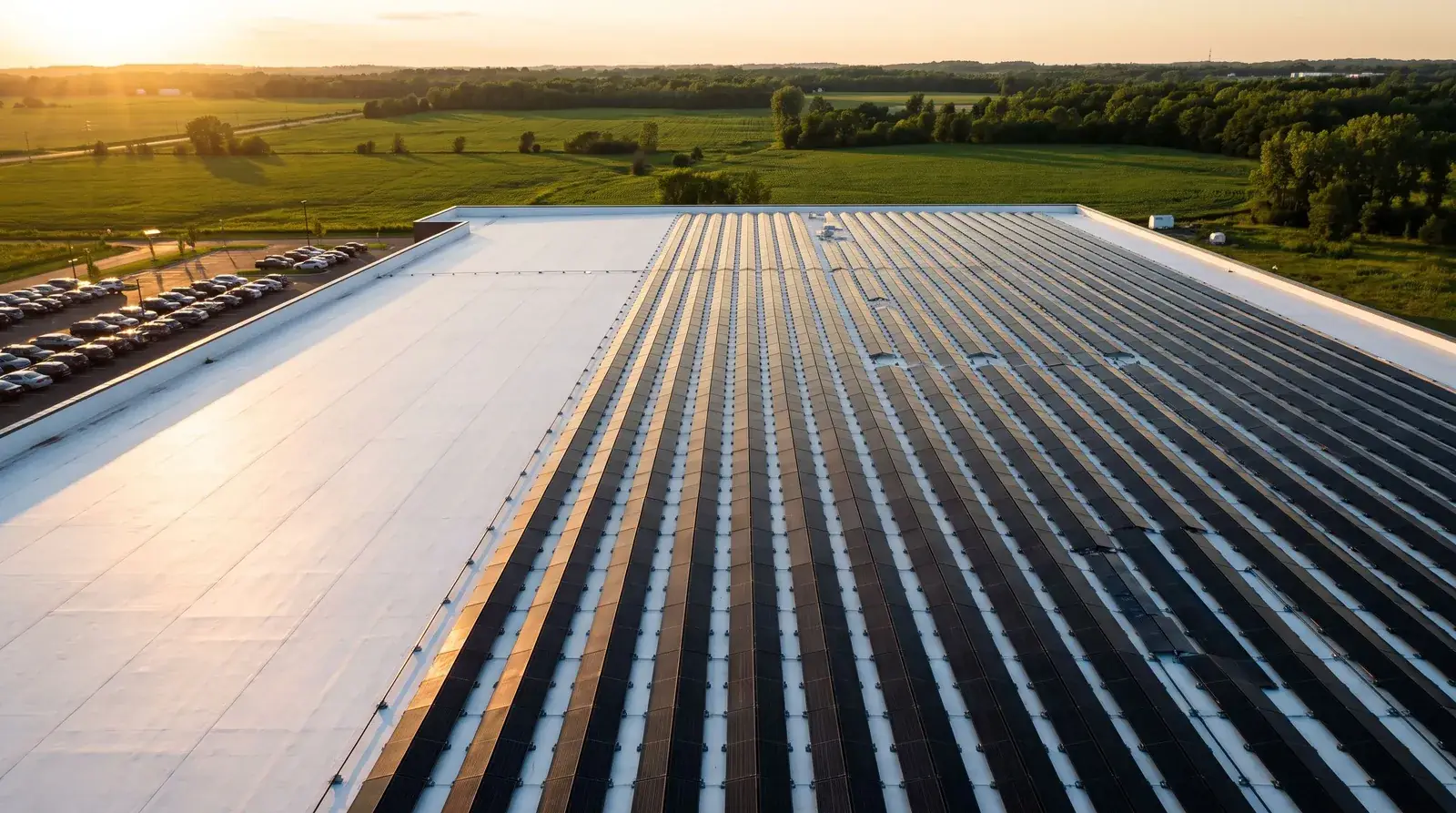
Picture a manufacturer in Shakopee with a flat roof and a big summer cooling load. Proposal A comes from a developer offering a 25-year PPA at a fixed price per kWh, no money down. Proposal B comes from a company that calls itself a developer but is offering to sell the owner a system, with design and installation handled by a separate EPC it names in the fine print. Proposal C is from a licensed EPC that designs and builds with its own electricians.
B and C are the same product: an owned system. The difference is that B carries an extra layer of margin and splits responsibility between two companies. A is a different product entirely, and it should be compared against C on 25-year cost, not on day-one price.
When a developer is worth the fee
Going direct isn't always the right call. A developer-led structure makes sense when:
- You don't want to spend capital and prefer to buy power at a fixed rate. You trade ownership and incentives for no upfront cost.
- You can't use the tax credit, and elective pay doesn't fit your organization.
- The project is large or complex, such as a multi-site portfolio, a utility-scale ground mount, or a community solar garden. Minnesota's community solar program is run through the Department of Commerce, which approved 30.5 MW of 2026 project capacity as of Sept. 1, 2026. That world is developer territory.
- You need someone to own the interconnection risk on a project where utility upgrades are uncertain.
When going direct to a licensed EPC saves money
For most Minnesota businesses, farms and nonprofits putting 20 kW to a few hundred kW on their own roof or land, the owner-financed model is simpler. You (or your lender) pay for the system, you own it from day one, and you keep the incentives.
- §48E credit. Commercial projects can still claim the 30% base credit, but projects that begin construction after July 4, 2026 must be placed in service by Dec. 31, 2027. Foreign-entity-of-concern rules also apply to projects beginning construction in 2026 and later. See our 2027 deadline explainer.
- Depreciation. 100% bonus depreciation was restored for property acquired after Jan. 19, 2025, and P.L. 119-21 changed solar's MACRS class for projects beginning construction after 2024. Have your CPA confirm what applies to you.
- Minnesota tax exemptions. Solar equipment is exempt from state sales tax, and the system's added value is exempt from property tax.
- USDA REAP. Farms and rural small businesses can still apply for REAP grants; see our REAP guide.
Run your own numbers with the commercial solar ROI calculator, then compare it with what a PPA would cost over the same term. Talk to your tax advisor before choosing.
Questions that reveal who you're really hiring
| Ask | Why it matters |
|---|---|
| Who stamps the engineering and who holds the electrical contractor license on this job? | Required in Minnesota; tells you whether design and install are in-house |
| Will any part of the install be subcontracted? To whom? | Each handoff adds margin and splits responsibility |
| Who owns the system on day one and in year 10? | Separates PPAs and leases from ownership |
| Who claims the tax credit and depreciation? | Determines whether incentives reach you |
| Who handles the Xcel or co-op interconnection application? | The step that most often delays commercial projects |
| Who answers the phone for service in year 5? | A developer may sell the asset; an EPC may not offer O&M |
For the full RFP checklist, see how to choose a commercial solar contractor, and for timelines, the commercial installation process.
How iSolar fits
iSolar is a Minnesota-licensed electrical contractor (EA761814) with master electrician John Ihle on staff, and we design and build commercial, farm and municipal systems for owners who want to keep the asset. If you're weighing a developer's PPA against ownership, we'll price the owned system so you can compare. Start on our commercial solar page.
Sources
- Minnesota DLI — Solar installer licensing requirement
- IRS — Clean Electricity Investment Credit (Section 48E)
- IRS — Instructions for Form 4562 (depreciation)
- Minnesota Department of Commerce — Community Solar Garden program for developers
- Minnesota Revisor — Minn. Stat. 297A.67 (sales tax exemption for solar equipment)
Frequently asked.
What does a commercial solar developer do?
A developer originates projects, models the economics, arranges financing and tax equity, and often owns the finished system, selling the power to the host through a PPA or lease. Developers usually hire an EPC to design and build.
What is a solar EPC?
EPC stands for engineering, procurement and construction. An EPC designs the system, buys the equipment, handles permits and interconnection, builds it and commissions it, then hands it over to the owner.
Is it cheaper to hire an EPC directly than to go through a developer?
Often, if your business will own the system and can use the tax benefits, because it removes a layer of fees and margin. If you have no capital or tax appetite, a developer-owned PPA can still be the better fit.
Do commercial solar installers need a license in Minnesota?
Yes. Minnesota's Department of Labor and Industry says the actual installation of a solar PV system must be performed by a Minnesota-licensed electrical contractor.
Who gets the tax credit in a commercial solar PPA?
Usually the system owner, which in a PPA is the developer or its investors. If you own the system yourself, you can claim the Section 48E credit if you have tax liability, or eligible entities may use elective pay.
What's the deadline for commercial solar tax credits?
Projects that begin construction after July 4, 2026 must be placed in service by December 31, 2027 to claim Section 48E. Projects that began construction earlier have a longer window. Confirm specifics with your tax advisor.

Have a question we haven't covered?
Talk to a local iSolar expert — free, no pressure. Call (651) 565-1140.