
Dual Fuel Heat Pumps: The Minnesota-Friendly Way to Electrify Your Heat
A heat pump handles fall and spring for less, the gas furnace takes January, and the thermostat picks the cheaper one. Here's the switchover math with real Minnesota prices.
Reviewed by John Ihle, MN Master Electrician (AM005101) · NABCEP-credentialed · iSolar, Saint Paul Park, MN · Last reviewed October 2026
The short answer: A dual fuel heat pump pairs an air-source heat pump with a gas furnace on the same ductwork. At 2025 Minnesota gas prices (about $1.06 per therm) and Xcel's roughly 11-cent winter energy price, the heat pump is cheaper whenever its efficiency (COP) stays above about 2.9. Below that, usually in deep cold, the furnace takes over automatically.
What a dual fuel heat pump is
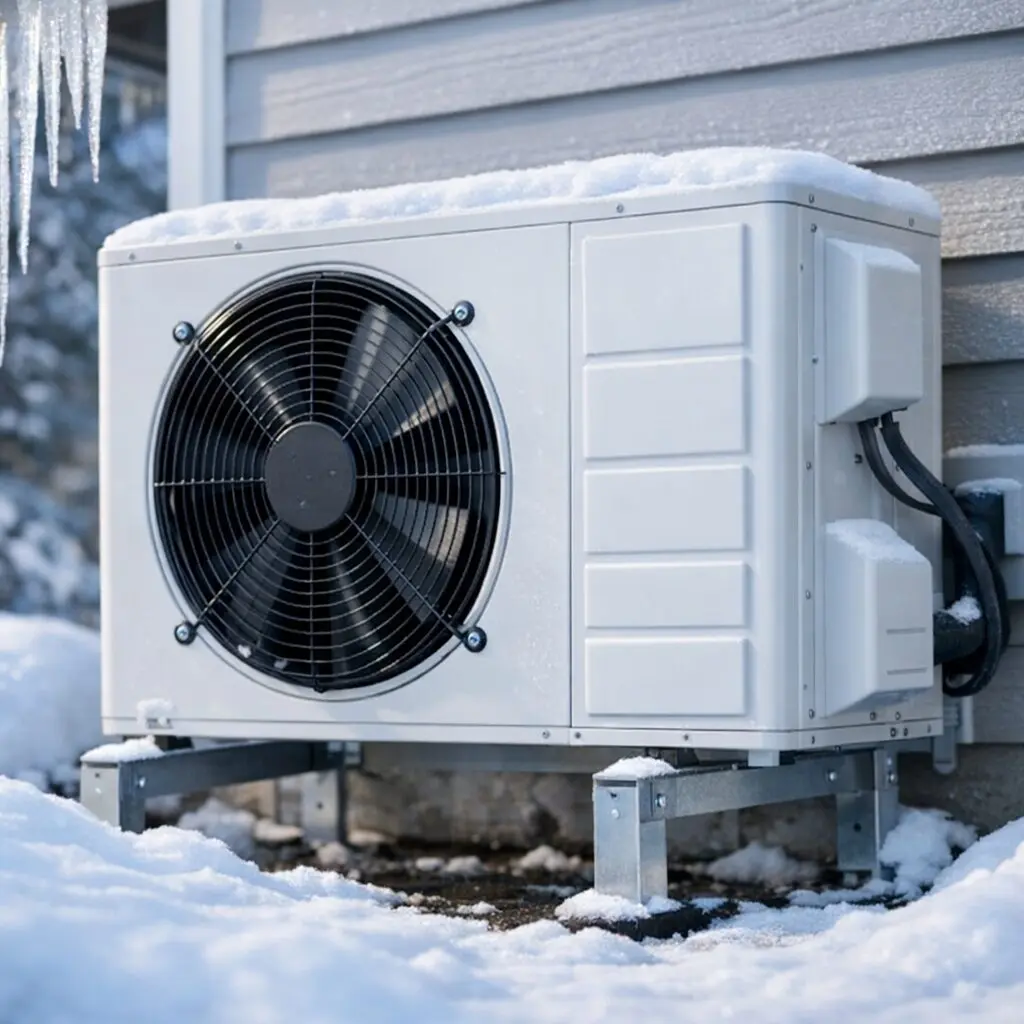
A dual fuel heat pump, also called a hybrid heat pump, is an electric air-source heat pump paired with a gas (or propane) furnace. The two share the same ductwork and one thermostat. The U.S. Department of Energy describes the setup simply: the heat pump handles most of the heating in milder weather, and the system switches to the furnace automatically when it gets colder.
In practice, the heat pump replaces your central air conditioner, since it's the same machine running in reverse in summer, and the furnace stays as the cold-weather and backup heat source. For a Minnesota house that already has a decent gas furnace, it's the least disruptive way to start heating with electricity.
DOE notes that heat pumps provide only about 3% of primary heating in the coldest U.S. climate zones (5 through 7), where furnaces heat roughly 63% of homes. Dual fuel is a big part of how that number grows without asking anyone to rip out a working furnace.
The heat pump with gas furnace backup: who runs when
A heat pump's efficiency is measured as COP, or coefficient of performance: units of heat delivered per unit of electricity used. COP falls as the outdoor temperature drops. A gas furnace's efficiency barely changes with the weather. So there's a crossover point, and there are two ways to set it:
- Thermal balance point. The temperature where the heat pump can no longer keep up with the house's heat loss. Below it, you need the furnace for comfort.
- Economic balance point. The temperature where heat from the heat pump costs more than heat from the furnace. Below it, the furnace is cheaper even if the heat pump could keep up.
A good installer sets the switchover at whichever comes first, using an outdoor temperature sensor and a thermostat or control board built for dual fuel.
The switchover math with Minnesota prices
Here's the break-even calculation. EIA reports Minnesota's average residential natural gas price was $10.98 per thousand cubic feet in 2025. Using EIA's conversion of 10.37 therms per thousand cubic feet, that's about $1.06 per therm. A therm is 29.3 kWh of heat, and a 95% furnace delivers about 27.8 kWh of it, so gas heat costs roughly 3.8 cents per kWh of heat delivered.
Divide your electric price by that number and you get the COP the heat pump must beat:
| Electric price per kWh | Break-even COP at $1.06/therm gas (2025 avg.) | Break-even COP at $1.17/therm gas (2022 avg.) |
|---|---|---|
| 7.5¢ (Xcel TOU overnight) | 2.0 | 1.8 |
| 11¢ (Xcel winter energy price) | 2.9 | 2.6 |
| 13¢ | 3.4 | 3.1 |
| 15¢ (all-in with riders) | 3.9 | 3.6 |
| 17¢ (Xcel TOU winter peak) | 4.5 | 4.0 |
Assumes a 95% AFUE furnace; electric prices are approximate Xcel figures. Your utility, furnace and rate plan change the answer.
Two things jump out. First, on a flat rate, the heat pump needs a COP near 3 to beat gas, so the economic switchover often lands well above the temperature where a cold-climate heat pump stops being able to heat the house. Second, Xcel's optional time-of-use plan moves the target around the clock: overnight power at about 7.5 cents makes the heat pump the cheap option at a COP of 2, while the 6 to 9 p.m. winter peak at about 17 cents favors the furnace. Some newer controls can switch on price as well as temperature. We cover the TOU plan in Xcel time-of-use rates.
To find your heat pump's COP at different temperatures, look up the model in the NEEP cold-climate heat pump list at ashp.neep.org, which reports rated performance at several outdoor temperatures, including 5°F. Plot those points against the break-even COP from the table and you'll see roughly where your switchover should sit. Cold-climate units qualifying for Xcel's rebate must show a COP of at least 1.75 at 5°F and keep at least 70% of their rated capacity at that temperature.
Why dual fuel often beats all-electric in Minnesota
We like all-electric heat pumps in the right house, and our post on whether heat pumps work in Minnesota winters covers when they do. But for many existing homes with gas service, dual fuel wins on three counts:
- Operating cost. The table above: on a flat rate, gas is often cheaper in deep cold.
- No giant resistance backup. An all-electric ducted system usually carries electric resistance strips for the coldest days. Those draw a lot of current, which is often what triggers a service upgrade. With dual fuel, the furnace is the backup.
- Outage resilience. A gas furnace's blower and controls draw little power, so a modest generator or battery can keep it running. A heat pump compressor needs far more.
The trade-off is that you keep paying a gas customer charge and maintaining two pieces of equipment, and you're still burning some gas.
Rebates and utility programs
Xcel Energy's 2024 to 2026 Minnesota residential rebates pay $1,600 for a qualifying air-source heat pump and $2,000 for a cold-climate air-source heat pump for customers who also get gas service (Combo or Natural Gas Only), or $1,100 and $1,500 for electric-only customers. Both require minimum efficiency ratings and a Quality Installation. Xcel's rebate sheet doesn't spell out separate rules for dual fuel systems, so confirm with Xcel before you buy. Our roundup of Xcel rebates covers the rest.
Co-op members have another option. Dakota Electric, for example, offers a reduced price on electricity used by heat pumps in exchange for letting it cycle or interrupt them on high-demand days, when "a backup heat source will take over." A gas furnace is exactly that backup, which is why dual fuel and these programs pair so well.
The electrical side of a hybrid heat pump install
The heat pump's outdoor unit needs a dedicated 240-volt circuit and an outdoor disconnect, usually where the AC circuit already is. If your existing AC circuit is sized right, the electrical work can be minor. Things our electricians check:
- Whether the existing AC circuit and breaker match the new unit's nameplate minimum circuit ampacity and maximum breaker size.
- Panel capacity, especially if an EV charger, induction range or heat pump water heater is also on the list. Our panel capacity check gives a quick read.
- Thermostat wiring for dual fuel control and the outdoor sensor.
- Permits: Minnesota requires an electrical permit for the new circuit work.
Plan the heat pump and the wiring together
If you're replacing an aging AC, that's the natural moment to go dual fuel. Let your HVAC contractor size the heat pump, and have iSolar's electricians handle the circuit, disconnect and panel work. Request an electrical quote and we'll check whether your panel is ready.
Sources
- U.S. Department of Energy — Heat pump systems
- U.S. EIA — Minnesota price of natural gas delivered to residential consumers
- U.S. EIA — How do I convert natural gas prices to dollars per therm?
- Xcel Energy — Minnesota residential rebate summary information sheet (2024–2026)
- Dakota Electric — Energy Wise load management programs
Frequently asked.
What temperature should a dual fuel heat pump switch to gas?
Set it at whichever comes first: the temperature where the heat pump can't keep the house warm, or where its heat costs more than gas. On Xcel's flat winter rate with 2025 gas prices, the heat pump needs a COP of about 2.9 to beat a 95% furnace.
Is a dual fuel heat pump worth it in Minnesota?
It often is when you're replacing a central air conditioner and already have a good gas furnace. The heat pump covers mild weather cheaply, the furnace covers deep cold, and you avoid large electric resistance backup.
What is the difference between a hybrid heat pump and a dual fuel heat pump?
They're usually the same thing: an electric air-source heat pump paired with a fossil-fuel furnace. The term hybrid is also used for heat pump water heaters, which are a different product.
Does Xcel give a rebate for a heat pump with a gas furnace backup?
Xcel's 2024 to 2026 program pays $1,600 for a qualifying air-source heat pump and $2,000 for a cold-climate model for customers with gas service. The rebate sheet doesn't address dual fuel specifically, so confirm eligibility first.
Can a dual fuel heat pump run during a power outage?
Neither half runs without electricity, but the gas furnace needs only enough power for its blower and controls. A modest generator or home battery can usually keep the furnace going; the heat pump compressor needs much more.
Do I need a panel upgrade for a dual fuel heat pump?
Usually less often than for an all-electric system, because the furnace replaces electric resistance backup heat. The heat pump typically uses a circuit similar to a central AC; a load calculation confirms it.

Have a question we haven't covered?
Talk to a local iSolar expert — free, no pressure. Call (651) 565-1140.