
Solar Panel Inspection: What a Good One Checks, and When You Need It
Most solar systems need very little attention, but there are three moments when an inspection pays for itself: after a big storm, before a sale, and when production quietly drops.
Reviewed by John Ihle, MN Master Electrician (AM005101) · NABCEP-credentialed · iSolar, Saint Paul Park, MN · Last reviewed October 2026
The short answer: A proper solar panel inspection covers four things: the roof attachments and flashing, the racking and module condition, the wiring and connectors under the array, and the inverter, rapid shutdown and monitoring data. In Minnesota you need one after hail or high-wind storms, before selling the house, after any unexplained production drop, and every few years as a checkup.
What a solar panel inspection is (and isn't)
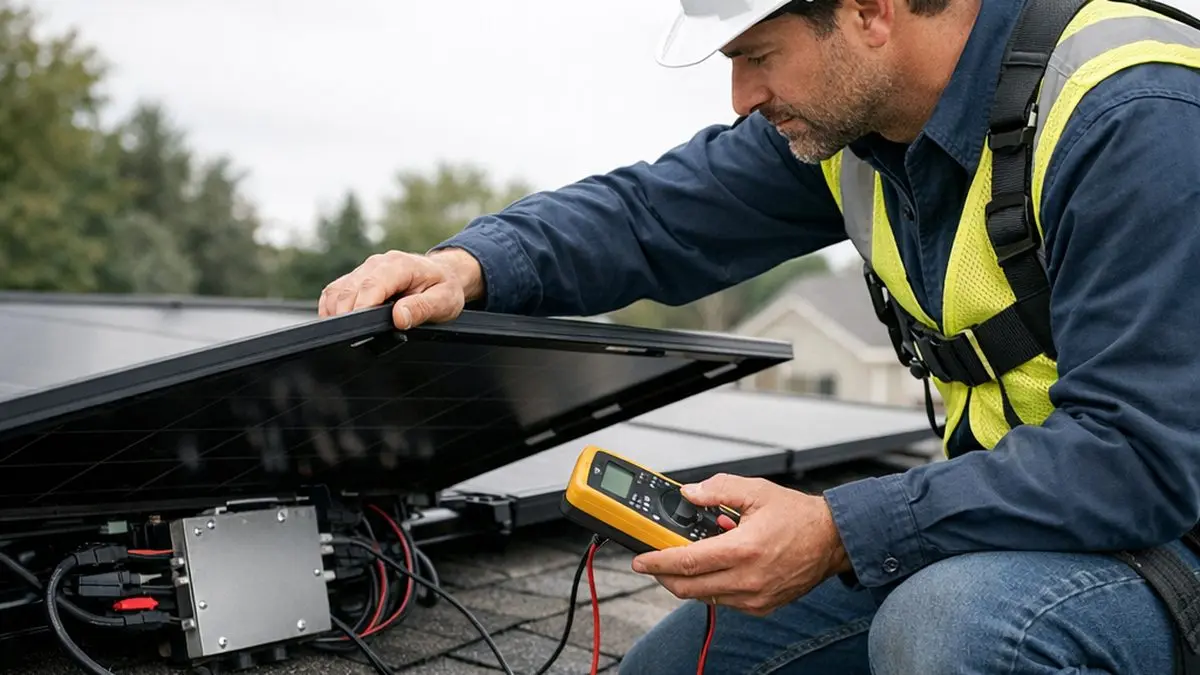
A solar panel inspection is a hands-on check of the whole system, not a glance from the driveway or a look at the app. Panels are the least likely part to fail. The problems we find are usually around them: a cracked flashing boot, a conductor rubbing on a rail, a connector that's backing out, an inverter logging faults nobody noticed.
It also isn't the same as the city's final inspection. That inspection confirms the system was installed to code on day one. A later inspection asks whether it's still in that condition after years of freeze-thaw cycles, hail, squirrels and sun.
Because much of the work is electrical, it should be done by someone who can legally open and test electrical equipment. In Minnesota that means a licensed electrical contractor, and for testing beyond visual checks, an electrician who knows PV.
The solar inspection checklist we use
| Area | What we check | Why it matters |
|---|---|---|
| Roof attachments | Flashing, sealant, lag or anchor condition, any staining in the attic below | Leaks start here, usually years before they show on a ceiling |
| Racking | Rail splices, clamps, fastener tightness, grounding and bonding hardware | Loose hardware lets panels shift in wind and snow load |
| Modules | Cracked glass, frame damage, hot spots, delamination, discoloration | Damaged panels can underperform or become a safety issue |
| Wiring under the array | Conductors off the roof surface, intact insulation, wire clips, rodent damage | Abrasion and chewing are common causes of ground faults |
| Connectors | Fully seated, matched brands, no heat discoloration | Mismatched or loose connectors are a known failure point |
| Inverters and electronics | Fault logs, microinverter or optimizer status, enclosure condition | Many failures show up in the logs before production visibly drops |
| Rapid shutdown and disconnects | Function test, labels and placards present and legible | Firefighter safety; required on rooftop PV |
| Monitoring | Compare production with expected output for the season | Catches slow losses a homeowner won't notice |
NREL's operations and maintenance guide for PV and storage backs several of these items: re-torquing current-carrying connections and thermal imaging of electrical components as part of inverter maintenance, ongoing inspection of wire management because wires exposed to sun, movement or animals need more attention, and annual roof maintenance where the roof is under warranty.
After a storm: hail, wind and heavy snow
Minnesota's hail season is the most common reason we're asked for a solar panel inspection. Most certified panels are tested to survive 25 mm (1-inch) ice balls at about 23 m/s, but bigger stones and wind-driven debris can still crack glass or damage frames.
The U.S. Department of Energy's Federal Energy Management Program recommends a torque audit of all fasteners before storm season and, after damage, testing for electrical faults and thermal, UV or infrared imaging to find hidden damage. Hairline cracks often don't show from the ground.
What to do after a hailstorm:
- Stay off the roof. Damaged panels can still carry voltage in daylight.
- Check your monitoring for panels or strings reading low or zero.
- Photograph what you can see from the ground and note the storm date.
- Call your insurer and a solar-qualified electrician. An inspection report with photos and test results helps the claim. Our guide to solar panels and hail damage covers the claims side.
Heavy, wet snow and ice dams deserve a look too, especially on older roofs. If panels need to come off for roof repairs, that's a detach-and-reset job, not an inspection.
Before you sell (or buy) a house with solar
A pre-sale solar inspection protects both sides. Buyers and appraisers want to know the system works and isn't hiding a roof problem. A clean report plus the paperwork below makes the solar an asset instead of a question mark:
- Final electrical inspection sign-off and the utility's permission to operate
- Production history from the monitoring app, ideally a full year
- Equipment warranties and any third-party warranty, including transfer steps
- Loan or ownership documents, so the buyer knows who owns the system
- A current inspection report with photos of the roof attachments and wiring
Our guide to selling a house with solar panels walks through the transfer process.
Routine solar system inspection: how often?
For a typical home system that's monitored and has no problems, you don't need a technician every year. A reasonable schedule:
| When | What | Who |
|---|---|---|
| Monthly | Glance at the monitoring app; compare with the same month last year | Homeowner |
| After year one | Check-in on production and any early issues; NREL recommends commissioning in two parts, the second after a year of operation | Installer |
| Every 3 to 5 years | Full on-roof inspection of attachments, wiring and electronics | Licensed electrician |
| After any hail, high wind or fault alert | Targeted inspection and testing | Licensed electrician |
| Before a roof replacement or home sale | Full inspection and documentation | Licensed electrician |
If your app shows zero, start with our monitoring offline fix guide. Often it's the home Wi-Fi, not the solar.
Visual check vs. electrical testing
A lot of what gets sold as an inspection is a visual walk-around. That's useful, but it can't find the problems that don't show. A full solar system inspection adds testing, and the right tests depend on the equipment you have.
- Microinverter systems (such as Enphase) report production panel by panel. Reviewing that data first tells us exactly which modules to look at on the roof, which shortens the visit.
- String inverter systems (such as SolarEdge with optimizers, or a plain string) are tested string by string. Measuring open-circuit voltage and current and comparing strings against each other shows which string is weak.
- Insulation resistance testing checks whether conductor insulation is breaking down somewhere along a run. It's the standard way to chase intermittent ground-fault alerts.
- Thermal imaging of panels and connections in full sun shows hot spots from cracked cells, failing bypass diodes or high-resistance connections before they cause damage.
Ask any inspector which of these they'll do, and get the results in writing with photos. A report that only says "system looks good" doesn't help an insurance claim or a buyer.
Red flags you can spot from the ground
- Wires hanging below the array edge or visible from the street
- Chewed debris, nesting material or squirrels going under the panels
- A panel that looks discolored, cracked or sits out of line with its neighbors
- Water stains on the ceiling or attic decking under the array
- An inverter or gateway with a red or amber light that won't clear
- Production down noticeably from the same month last year without a weather reason
Any one of these is worth a call. Several together usually mean something has been wrong for a while.
Book an inspection with a licensed electrician
iSolar inspects and services solar systems across the Twin Cities, including systems we didn't install. Our solar panel repair and service team works under our Minnesota electrical license, and if you're timing a new system or an expansion, see when to install solar in Minnesota. To schedule, contact us with your address and system details.
Sources
Frequently asked.
How often should solar panels be inspected?
For a monitored home system with no issues, a full on-roof inspection every three to five years is reasonable. Add an inspection after hail or high winds, after any fault alert or production drop, and before a roof replacement or home sale.
What does a solar panel inspection include?
A complete inspection covers roof attachments and flashing, racking and fasteners, module condition, wiring and connectors under the array, inverters or microinverters, rapid shutdown, labeling and a review of production data.
Should I get my solar panels inspected after a hailstorm?
Yes, if the storm was severe or your monitoring shows a drop. Cracks are often invisible from the ground. Stay off the roof, document what you can see and have a solar-qualified electrician test and photograph the array for your insurer.
Can a home inspector inspect solar panels?
A general home inspector can note visible issues, but most don't go on the roof or test PV circuits. For a sale, a separate inspection by a licensed electrician who works on solar gives buyers and appraisers more confidence.
Who can inspect solar panels in Minnesota?
Visual checks can be done by anyone, but opening and testing electrical equipment is electrical work. Use a licensed electrical contractor with PV experience.
Can solar panels cause roof leaks?
Properly flashed attachments shouldn't leak, but sealants and flashing can be damaged by ice, hail or poor installation. Water stains under the array are a reason to inspect the attachments right away.


Have a question we haven't covered?
Talk to a local iSolar expert — free, no pressure. Call (651) 565-1140.