
Workplace EV Charging: A Practical Plan for Minnesota Employers
Most employees need far less charging at work than you'd guess. Here's how to size workplace EV charging to real demand, keep it off your demand charges, and set fair rules.
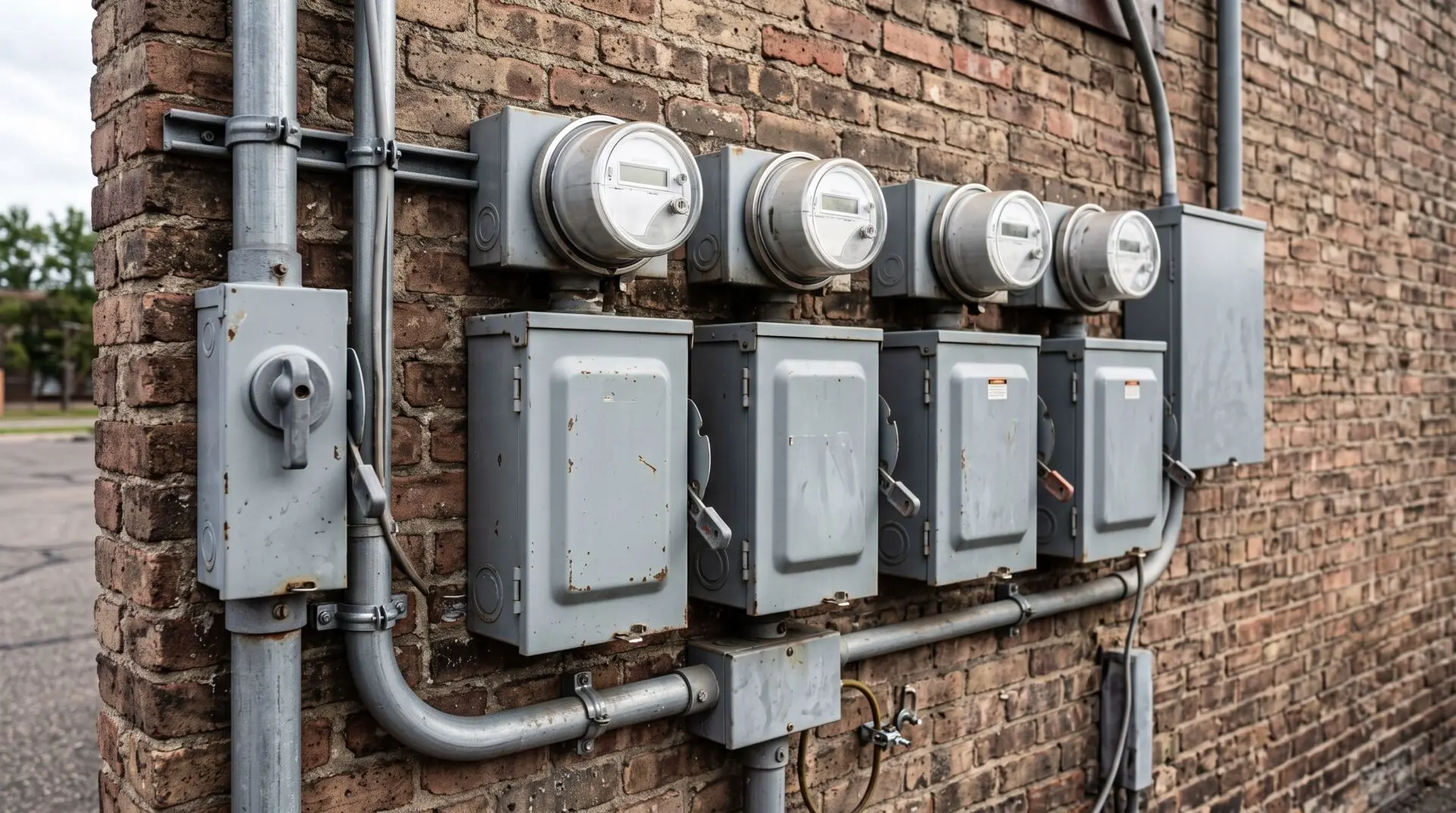
Reviewed by John Ihle, MN Master Electrician (AM005101) · NABCEP-credentialed · iSolar, Saint Paul Park, MN · Last reviewed October 2026
The short answer: Most Minnesota workplaces can start with a few shared Level 2 ports rather than one per EV driver. At about 7.2 kW, a Level 2 port adds roughly 25 miles of range per hour, so a typical commute is replaced in one to two hours. Use load management to stay within your existing service, and set a sharing policy before day one.
Start with demand, not hardware
The most common mistake with workplace EV charging is buying hardware before asking who will use it. The U.S. Department of Energy's Alternative Fuels Data Center (AFDC) recommends starting with an employee survey: who drives an EV or plug-in hybrid now, who plans to in the next two years, and how far they commute.
That survey answers the real question, which is not "how many EVs do we have?" but "how many kWh do people need to replace each day?" For most commuters, the answer is small. A 30-mile round trip in a vehicle that gets about 3 miles per kWh uses roughly 10 kWh. AFDC puts a common 7.2 kW Level 2 charger at about 25 miles of range per hour, so that commute is replaced in well under two hours.
In other words, a single Level 2 port can serve several employees in a workday if people move their cars. That changes the budget, the electrical design and the parking plan.
How many workplace EV charging stations do you need?
AFDC suggests two simple models for sharing. When you have more ports than drivers, assign one driver per port. When you have fewer, pair employees as "charging buddies" who split a port, or give one the morning and the other the afternoon. Here's how that plays out at different stages:
| Stage | EV drivers on site | Starting point | Electrical approach |
|---|---|---|---|
| Pilot | 1–4 | 2 Level 2 ports (one dual-port pedestal or two wall units) | One or two branch circuits, often from existing panel capacity |
| Growing | 5–12 | 4–6 ports, shared with a time limit | Load-managed circuits; possibly a new subpanel |
| Established | 12–30 | 8–12 ports plus conduit stubbed for more | Dedicated EV panel or feeder; load management sized to service capacity |
| Large campus | 30+ | Phased banks of ports; consider a few faster units for turnover | Service study with the utility; possible separate service |
These are starting points, not rules. A dealership, clinic or plant running two shifts will need a different ratio than a 9-to-5 office. Level 1 (120-volt) outlets are the cheapest option, but AFDC notes they generally serve only one vehicle per workday, which makes them a fit for plug-in hybrids and long-dwell parking, not a growing EV population.
Who pays for employee EV charging?
Many employers offer charging free as a perk. Others charge a fee to recover equipment and energy costs, and because free charging can feel unfair to employees who don't drive EVs. AFDC suggests pricing "slightly above local residential electricity rates" so the station covers its costs without pulling in people who could charge at home.
In Xcel territory, the residential energy price is roughly 13¢ per kWh in summer and 11¢ in winter on the standard flat rate, so a workplace price a bit above that range is a reasonable starting point. Networked chargers can collect fees automatically; simple units can't.
Two other policy points AFDC raises:
- Time limits. One example policy: free for four hours, then an hourly fee, with privileges suspended after repeated violations.
- Taxes and liability. Whether free charging is a taxable fringe benefit, and what user agreement you need, are questions for your accountant and legal counsel.
One more thing has changed: the federal §30C charger tax credit ended for property placed in service after June 30, 2026, under the One Big Beautiful Bill Act. Don't build a 2026–2027 budget around it.
Load management: fitting chargers on your existing service
This is where an electrician earns their fee. The National Electrical Code treats EV charging as a continuous load, so each circuit is sized at 125% of the charger's output. Ten 48-amp chargers would add 600 amps of breaker capacity on paper, which most small and mid-size buildings simply don't have.
The fix is an energy management system. The NEC (625.42 in the 2023 edition) says that where an energy management system controls EV chargers, the load on the service and feeder is the maximum the system allows. Practically, a group of networked chargers can share a fixed amperage, say 100 amps, and divide it among whichever cars are plugged in. Minnesota now enforces the 2026 NEC for permits filed on or after Aug. 17, 2026, so your electrician will confirm the current section during design.
Load management also protects your bill. On Xcel's General Service rates you pay a demand charge per kW on the month's highest demand. Xcel's December 2024 rate notice listed those at $16.49 per kW in summer and $11.90 in winter. Six chargers starting at 8 a.m. alongside your HVAC could set a new monthly peak. Capping the EV load, or staggering it, avoids that. Our guide to how demand charges work explains the billing side, and our EV charger load management post covers the hardware.
Pairing workplace charging with solar carports
Workplace charging and solar line up unusually well: employees park during daylight hours, which is when solar produces. A solar carport also shades cars in summer and keeps snow off windshields in winter.
- Timing. Day-shift cars are parked through the midday hours when an array produces most.
- Conduit once. Running EV conduit while carport footings and trenching are open is far cheaper than cutting pavement later.
- Tax credit window. Commercial solar can still qualify for the §48E credit, but projects beginning construction after July 4, 2026 must be placed in service by Dec. 31, 2027. Talk to your tax advisor about how it applies to you, and see our 2027 deadline explainer.
Solar won't erase demand charges on its own, because a cloudy day can still produce a peak. Load management does that job; solar lowers the kWh. See our solar carports and ground mounts page for structure options.
Utility programs and practical checklist
Xcel has run Minnesota business EV programs, including EV Supply Infrastructure (utility-built make-ready wiring) and Optimize Your Charge, which paid $50 a year per registered charger or vehicle for off-peak fleet charging. Xcel's 2024 business program summary listed its commercial EV pilots as at capacity, so ask about current openings before you plan around them.
- Survey employees: current and planned EVs, commute distance, shift times.
- Pull 12 months of bills and interval data to see your demand peaks.
- Have an electrician check panel and service capacity before choosing chargers.
- Pick networked chargers if you want fees, time limits or load sharing.
- Stub conduit for future ports during the first install.
- Write the policy: access, time limits, fees, enforcement.
Planning workplace EV charging with iSolar
iSolar's electrical team designs and installs commercial EV charging under our Minnesota electrical contractor license, and we can pair it with a rooftop or carport array. Start with our commercial solar page, or request a site visit and we'll look at your service, your parking layout and your peaks together.
Sources
- U.S. DOE Alternative Fuels Data Center — Workplace Charging for Plug-In Electric Vehicles
- U.S. DOE Alternative Fuels Data Center — Charging at Home (Level 2 range per hour)
- Leviton Captain Code — 2023 NEC 625.42 energy management systems
- Xcel Energy — Minnesota Business Program Summary (2024)
- Xcel Energy — Minnesota electric rate notice (Dec. 2024), General Service demand charges
Frequently asked.
How many EV chargers does a workplace need?
Usually fewer than the number of EV drivers. A Level 2 port can replace a typical commute in one to two hours, so with sharing rules several employees can use one port per day. Start with an employee survey and add ports as demand grows.
Should employers charge employees for EV charging?
Either approach works. The Department of Energy suggests pricing slightly above local residential electricity rates if you charge a fee, which covers costs and discourages use by people who can charge at home. Ask your accountant about tax treatment if it's free.
Is Level 1 charging enough at work?
For plug-in hybrids and short commutes, sometimes. A 120-volt outlet generally serves only one vehicle per workday, so it doesn't scale as more employees switch to EVs.
Will workplace EV chargers raise my demand charges?
They can if several chargers run at full power while your building is at its peak. Networked chargers with load management cap the total EV draw, which keeps them from setting a new monthly demand peak.
Is there a tax credit for workplace EV chargers in 2026?
Not for new installs. The federal Section 30C credit ended for property placed in service after June 30, 2026. Check with Xcel or your utility for any current business EV programs.
Can I add EV chargers without upgrading my electrical service?
Often yes. An energy management system lets several chargers share a fixed amount of capacity, and code allows the service calculation to use that managed limit. An electrician's load calculation tells you how much room you have.
Have a question we haven't covered?
Talk to a local iSolar expert — free, no pressure. Call (651) 565-1140.