
Electric Garage Heaters: 240V Sizing and Wiring for a Minnesota Garage
A 240-volt heater can turn a frozen garage into a usable shop. Size it wrong and it runs all day and never catches up. Here is how to size it, wire it and estimate what it costs to run.
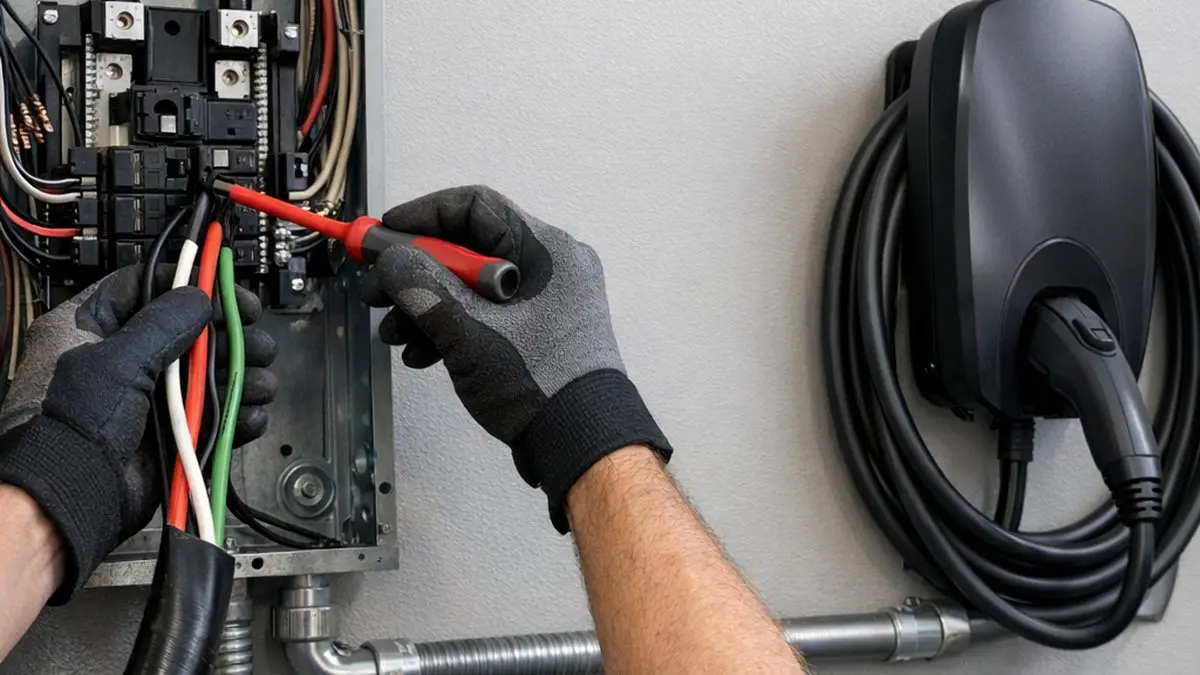
Reviewed by John Ihle, MN Master Electrician (AM005101) · NABCEP-credentialed · iSolar, Saint Paul Park, MN · Last reviewed October 2026
The short answer: For an insulated Minnesota garage, plan on roughly 10 to 12 watts per square foot: about 5,000 W for a one-car garage and 7,500 W for a typical two-car. A 5,000 W, 240V heater draws about 21 amps and needs a 30-amp circuit; 7,500 W needs 40 amps. At about 15 cents per kWh, 7,500 W costs roughly $1.13 per hour at full output.
Why a 240V electric garage heater is the usual choice
A plug-in 120-volt space heater tops out around 1,500 watts. In a Minnesota garage in January, that barely takes the edge off around your workbench. A hardwired 240-volt electric garage heater in the 4,000 to 10,000 watt range is what actually holds a garage at a working temperature.
Electric heat has real advantages in a garage: no combustion, no flue, no gas line, and a simple thermostat. The tradeoffs are operating cost and the load it puts on your electrical panel. Both are manageable if you size the heater to the space and the circuit to the heater.
Sizing: watts per square foot for Minnesota garages
Heater makers publish rules of thumb for rooms. King Electric's sizing guide, for example, suggests about 6 watts per square foot for newer, well-insulated homes, about 10 watts per square foot for older, less-insulated homes, and adding 2 watts per square foot for extreme-cold locations. A garage with insulated walls and ceiling but a big overhead door behaves more like the older-home case, and Minnesota qualifies as extreme cold.
That is why we use 10 to 12 watts per square foot as a starting point for an insulated, attached Minnesota garage held at a shop-friendly 50 to 60°F. Treat it as a first estimate, not an engineering calculation.
| Garage | Approx. size | At 10 to 12 W/sq ft | Common heater size |
|---|---|---|---|
| One-car | 12 x 22 ft (264 sq ft) | 2,640 to 3,170 W | 4,000 to 5,000 W |
| Two-car | 24 x 24 ft (576 sq ft) | 5,760 to 6,910 W | 7,500 W |
| Deep two-car / small shop | 24 x 30 ft (720 sq ft) | 7,200 to 8,640 W | 7,500 to 10,000 W |
| Three-car | 36 x 24 ft (864 sq ft) | 8,640 to 10,370 W | 10,000 W, or two heaters |
Adjust up for:
- Uninsulated walls or ceiling. Heat loss climbs fast. Insulating is usually cheaper than buying a bigger heater and paying to run it.
- An uninsulated or leaky overhead door. New weatherstripping and a bottom seal are some of the best dollars you will spend.
- High ceilings above the 8-foot baseline most guides assume.
- Detached garages with four exposed walls.
To translate watts into the BTU ratings you see on gas heaters, multiply by about 3.41. A 5,000 W electric heater puts out roughly 17,000 BTU per hour, which matches the published rating on common 5,000 W garage units.
240V circuit sizing: breaker and wire
Fixed electric heat is treated as a continuous load, so the circuit is sized at 125% of the heater's current. Put another way, the heater can only use 80% of the breaker rating. King Electric's guide shows the same rule: a 30-amp, 240V circuit supports up to 24 amps (5,760 W), and a 40-amp circuit up to 32 amps (7,680 W).
| Heater at 240V | Amps | x 125% | Typical breaker | Typical copper wire |
|---|---|---|---|---|
| 4,000 W | 16.7 A | 20.8 A | 25 or 30 A, 2-pole | 10 AWG |
| 5,000 W | 20.8 A | 26.0 A | 30 A, 2-pole | 10 AWG |
| 7,500 W | 31.3 A | 39.1 A | 40 A, 2-pole | 8 AWG |
| 10,000 W | 41.7 A | 52.1 A | 60 A, 2-pole | 6 AWG |
Two field notes:
- Check the nameplate and the manual. Some heaters have switchable wattage settings. A unit like Fahrenheat's FUH54 can be set from 2,500 to 5,000 W at 240V, drawing 10.4 to 20.9 amps. Size the circuit for the highest setting someone could select.
- 208V is not 240V. On 208V the same heater puts out about 25% less heat. That matters in some townhome and mixed-use buildings.
Wire size also depends on cable type, run length and how the cable is routed. Your electrician confirms the final size. In Minnesota, adding a 240-volt heater circuit requires an electrical permit and inspection.
Panel capacity: will your service handle it?
A 7,500 W heater adds about 31 amps of continuous load at 240V. On a 200-amp service with gas heat and a gas range, that usually fits. On a 100-amp service that already carries a central air conditioner, an electric dryer or an EV charger, it may not.
Before you buy a heater, we look at:
- Your service size and main breaker rating.
- Open breaker spaces, or whether a subpanel in the garage makes more sense.
- A load calculation that adds the heater to everything else that can run in winter.
- Whether an EV charger is coming, since heater and charger often run at the same time on a cold night.
Our free panel capacity check gives a first read. If the panel is tight, a smaller heater with better insulation, a load-managed EV charger, or a service upgrade are the usual paths. Our electrical services page covers panel and service work.
What an electric garage heater costs to run
Electric resistance heat turns every kilowatt-hour into about 3,412 BTU. Cost per hour at full output is simply kilowatts times your price per kWh. Xcel's standard residential energy charge is roughly 11 cents per kWh in winter, and all-in costs including fixed charges and riders often land around 14 to 16 cents. The U.S. EIA put Minnesota's 2024 average residential price at 15.45 cents per kWh, so we use 15 cents below.
| Heater | Cost per hour at full output | 100 hours at full output |
|---|---|---|
| 4,000 W | $0.60 | $60 |
| 5,000 W | $0.75 | $75 |
| 7,500 W | $1.13 | $113 |
| 10,000 W | $1.50 | $150 |
A thermostat cycles the heater, so actual hours at full output depend on insulation, setpoint and outdoor temperature. Practical ways to cut the bill:
- Hold a low setback (40 to 45°F) and bump it up only when you are working.
- Seal the overhead door and the attic hatch first.
- Do not heat a garage to house temperature overnight unless you need to.
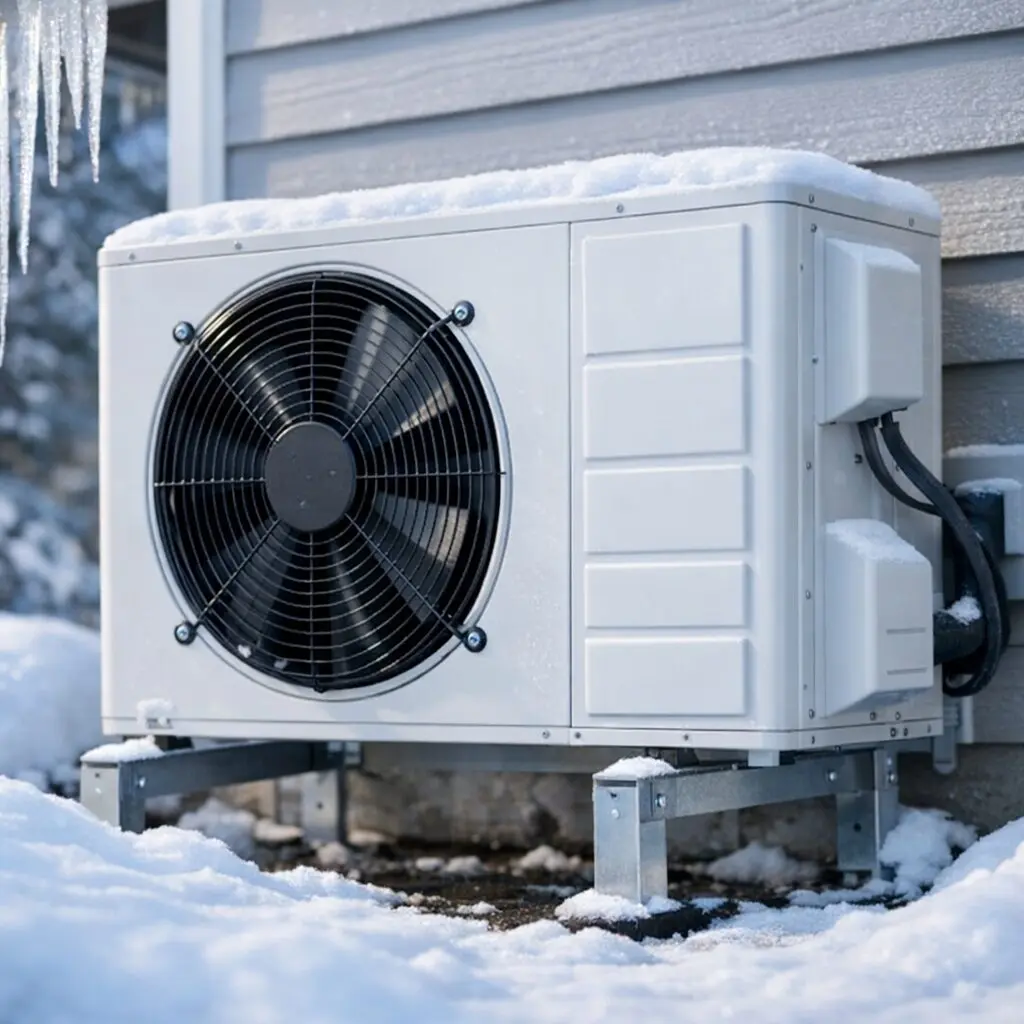
- If you heat the space most days all winter, look at a cold-climate ductless heat pump instead. It can deliver more heat per kWh than resistance heat; see our mini-split cost guide.
Installation and safety notes
- Mounting. Ceiling or high-wall mounting keeps the heater out of the way of vehicles and ladders. Follow the manufacturer's minimum clearances to walls and ceiling.
- Aim it right. Point the airflow toward the work area and away from the overhead door.
- Flammables. Garages hold gasoline, solvents and aerosol cans. Store them away from the heater and follow the manual's warnings.
- Thermostat. A built-in thermostat is fine for most garages. A remote line-voltage or low-voltage thermostat lets you mount the control where you work.
- Disconnect. Hardwired heaters need a means of disconnect; many use the breaker if it is within sight or lockable, others get a local switch.
Have your garage heater circuit done right
iSolar's electrical team runs 240-volt heater circuits, garage subpanels and panel upgrades under our Minnesota electrical license, with the permit and inspection handled. If you are also thinking about solar to offset winter loads, our insulation vs. solar guide explains what to do first. When you are ready, request a quote and we will size the heater circuit to your garage and your panel.
Sources
Frequently asked.
What size electric heater do I need for a two-car garage in Minnesota?
For an insulated two-car garage of about 576 square feet, plan on roughly 6,000 to 7,000 watts, which usually means a 7,500 W heater. Uninsulated garages or leaky overhead doors need more, and insulating first is usually the better investment.
What breaker do I need for a 5000 watt garage heater?
A 5,000 W heater at 240 volts draws about 20.8 amps. Because heaters are continuous loads, the circuit is sized at 125%, so it typically goes on a 30-amp, 2-pole breaker with 10 AWG copper wire.
How much does it cost to run an electric garage heater?
Multiply the heater's kilowatts by your electricity price. At about 15 cents per kWh, a 5,000 W heater costs about 75 cents per hour at full output and a 7,500 W heater about $1.13. A thermostat cycles the heater, so real costs depend on insulation and setpoint.
Can I plug a garage heater into a regular outlet?
Only small 120-volt heaters of about 1,500 watts, which are too weak for most Minnesota garages. Larger 240-volt heaters must be hardwired or connected to a dedicated 240-volt circuit sized for the heater.
Do I need a permit to install a garage heater in Minnesota?
Yes. Adding a new 240-volt circuit requires an electrical permit and inspection through the Minnesota Department of Labor and Industry or your city's inspection office. A licensed electrician can pull the permit for you.
Is a heat pump better than an electric garage heater?
For garages heated most days all winter, a cold-climate ductless heat pump usually costs less to run because it moves heat instead of making it. For occasional use, a resistance heater is cheaper to buy and simpler to install.


Have a question we haven't covered?
Talk to a local iSolar expert — free, no pressure. Call (651) 565-1140.