
Electrical Panel Replacement Cost in Minnesota: Same-Size Swaps vs. 100A-to-200A Upgrades
A panel swap and a service upgrade are different jobs with different price tags. Here's what moves the number in older Twin Cities homes.
Reviewed by John Ihle, MN Master Electrician (AM005101) · NABCEP-credentialed · iSolar, Saint Paul Park, MN · Last reviewed October 2026
The short answer: National cost guides put a 200-amp panel replacement at about $1,300 to $3,000 installed and a 100-amp swap at about $800 to $1,500 (This Old House, 2026). A 100A-to-200A service upgrade usually lands in that 200-amp range or higher once a new meter socket, mast or grounding is needed. Permits add roughly $50 to $300.
Electrical panel replacement cost: the national ranges
Electrical panel replacement cost depends mostly on one question: are you swapping the panel at the same size, or upgrading the whole service? The panel box itself is the cheap part. Labor, the meter socket, the service mast, grounding and code items you didn't know you'd trigger make up most of the bill.
Here are current national figures from This Old House's cost guide, updated in March 2026:
| Service size | Panel only | Panel + installation |
|---|---|---|
| 100 amp | $100 to $200 | $800 to $1,500 |
| 200 amp | $250 to $350 | $1,300 to $3,000 |
| 300 amp | $350 to $500 | $1,800 to $3,500 |
| 400 amp | $500+ | $2,000 to $4,000 |
The same guide lists permits at $50 to $300, moving a panel at $800 to $3,000, a meter box installed at $1,800 to $3,500, and AFCI or GFCI breakers at $35 to $60 each. HomeAdvisor's older guide, built from member projects, puts a typical panel job at $520 to $2,124 and a 100-to-200-amp upgrade at $750 to $2,000, not counting new circuits. These are national averages. Twin Cities quotes vary with the house, and we price on site.
Same-size swap vs. 100 amp to 200 amp upgrade cost
The jobs look similar from the basement, but they aren't.
| Same-size panel replacement | 100A to 200A service upgrade | |
|---|---|---|
| What changes | Panel and breakers; existing circuits reconnected | Panel, meter socket, service entrance conductors, often the mast and grounding |
| Utility involvement | Disconnect and reconnect at the meter | Disconnect, reconnect, and Xcel's approval of the new service equipment |
| Typical driver of cost | Number of circuits, condition of old wiring | Meter location, overhead vs. underground service, distance from meter to panel |
| National range | Roughly $800 to $1,500 (100A) | Roughly $1,300 to $3,000, more with a new meter base or relocation |
| Time with power off | Usually part of a day | Usually a full day |
HomeAdvisor puts typical labor at 4 to 8 hours for an upgrade. In practice the outage window depends on how quickly the utility can disconnect and reconnect, which is why the scheduling matters as much as the wiring.
Where 200 amp service upgrade cost climbs
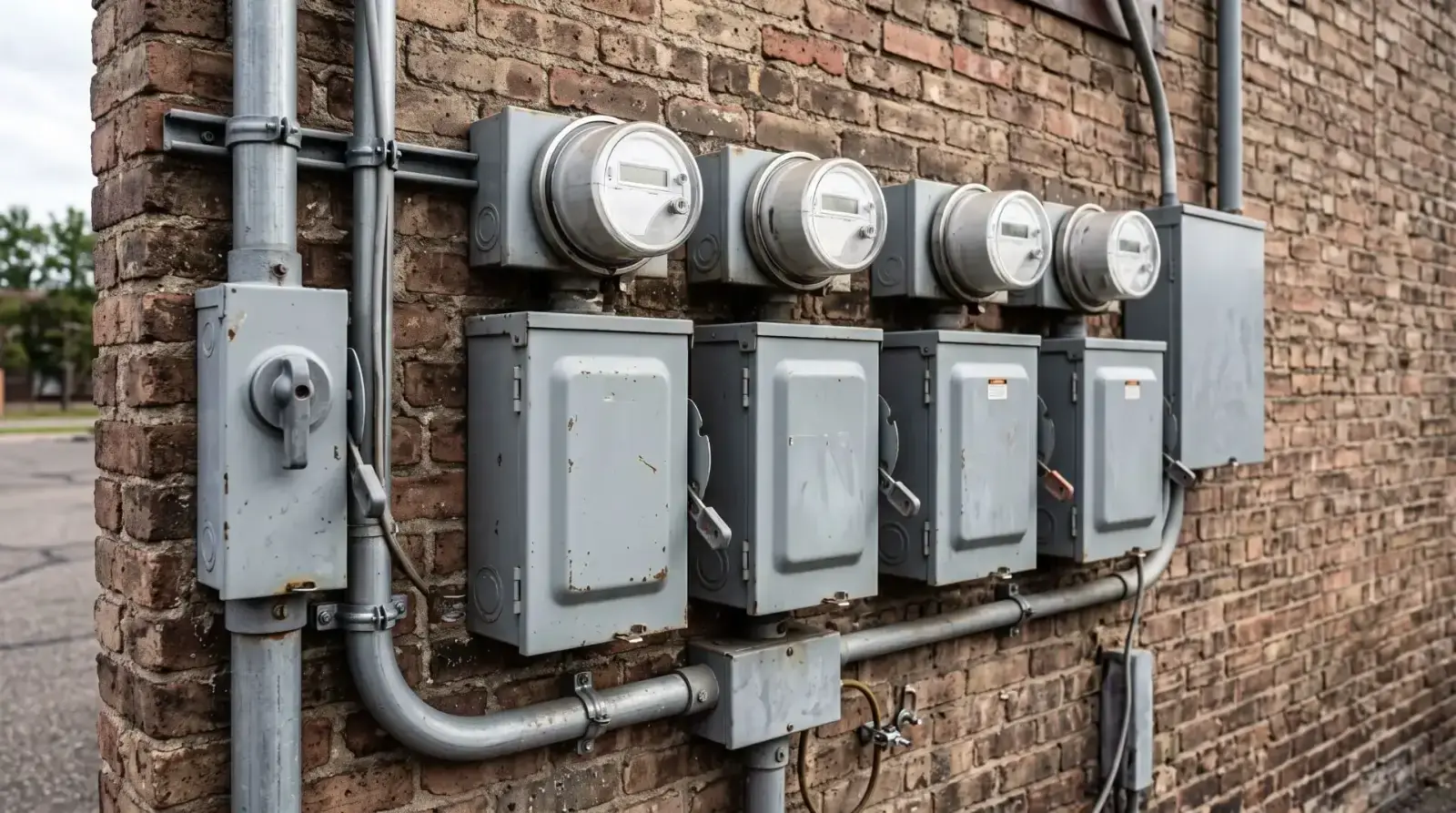
- Indoor meters. Some older Minneapolis and Saint Paul homes still have meters inside. The utility decides whether the meter has to move outside when the service is replaced.
- Underground services. If the service conductors themselves have to be replaced underground, the cost jumps; HomeAdvisor lists $5,000 or more.
- Panel relocation. Panels in closets, bathrooms or tight stairwells may not meet working-clearance rules and have to move.
- Old branch wiring. Cloth-insulated, aluminum or Zinsco-era equipment often needs repairs the inspector won't let slide.
Worked example: two Saint Paul houses
Here's how the same request, "replace my panel," turns into two different jobs. These are illustrations built from the national ranges above, not quotes.
- House A, Highland Park, 1950s rambler. 100-amp breaker panel, outdoor meter, overhead service in good shape. The owners just want to get rid of a brand with a poor track record and add a few circuits. That's a same-size or modest swap: panel, breakers, the exterior disconnect and a permit. It sits near the 100-amp row in the table, plus the code items.
- House B, Como, 1920s two-story. 60-amp fuses, meter in the basement, and plans for a heat pump and an EV. That's a full service upgrade: new 200-amp panel, new meter socket on the outside wall, new service entrance cable and mast, new grounding electrodes, and utility coordination. Expect the upper end of the 200-amp range or more, especially if some old branch wiring has to be corrected along the way.
Both homeowners asked for the same thing. The house decided the price.
Code items Minnesota inspectors look for
Minnesota adopted the 2026 NEC for electrical permits filed on or after August 17, 2026, and some section numbers shifted from the 2023 edition. Two requirements catch homeowners by surprise:
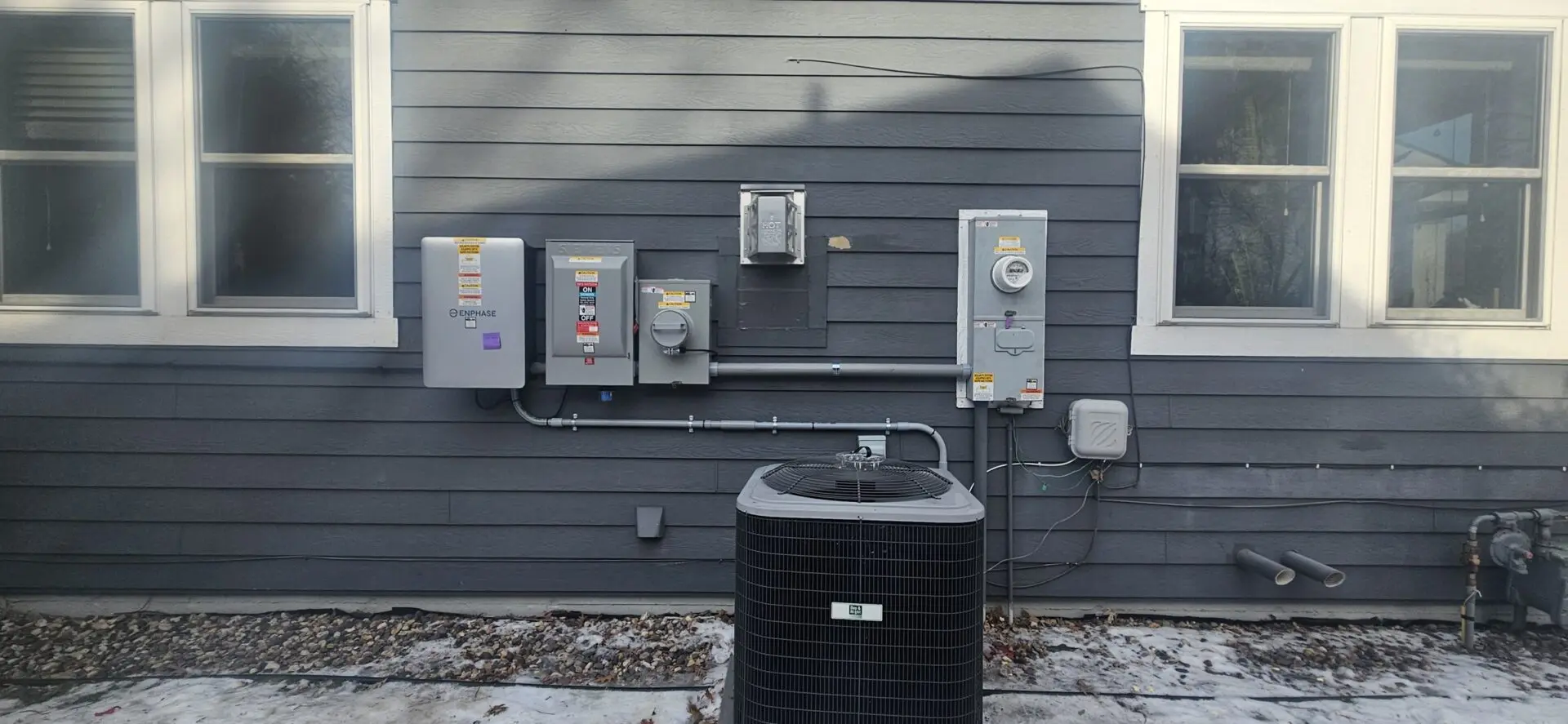
- Exterior emergency disconnect. The 2023 NEC added an outdoor emergency disconnect for one- and two-family homes (230.85 in that edition). Saint Paul's inspection guidance says it applies even to a routine same-amperage panel replacement, such as fuses to breakers. Expect it on your quote.
- Grounding and bonding. The inspector needs access to confirm the grounding electrode system is intact. Missing or undersized grounding is a common add-on.
Saint Paul's published fee is a concrete example of what the permit costs: $85 for a service upgrade or change-out, covering existing circuits reconnected to new breakers, plus $15 for each added or modified circuit. Other cities and the Department of Labor and Industry set their own fees. Our Minnesota electrical code guide covers the other changes homeowners notice.
The timeline, start to finish
- Site visit and load calculation. We look at the panel, meter, service drop and what you plan to add.
- Permit. Pulled by the licensed contractor before work starts.
- Utility coordination. For an upgrade, the utility has to approve the new service and schedule the disconnect and reconnect. This is usually the longest wait.
- Install day. Power off, old equipment out, new panel and service in, circuits landed and labeled.
- Inspection. The inspector checks grounding, clearances, labeling and the disconnect. Some jurisdictions inspect before the utility reconnects.
A same-size swap can go from quote to finished in a week or two. A full service upgrade typically takes longer because of utility scheduling, especially after storms, when crews are busy restoring service.
Signs your panel needs replacing now
- A fuse box, or a Zinsco or similar brand with known failure problems
- Breakers that are warm, buzzing, scorched or won't stay reset (see why a breaker keeps tripping)
- Rust or water staining inside the panel, common where a mast or meter leaks
- No open spaces, and a panel full of tandem breakers and double-tapped lugs
- An insurer or home inspector flagging it in writing
Planning for solar, EV charging and heat pumps
If a heat pump, EV charger or solar array is on your list, size the replacement for where the house is going, not where it has been. That doesn't always mean a bigger service. On solar jobs, the inverter can often connect with a line-side tap ahead of the main breaker instead of a backfed breaker: in a review of roughly 370 of our recent residential solar plan sets, about three out of four used a line-side tap, and only about one in nine needed a new main panel or meter-main. Load management or a smart electrical panel can also delay an upgrade for EV charging.
Start with our free panel capacity check to see where your home stands.
Get a quote that shows every line
Our electricians, working under iSolar's Minnesota electrical license (EA761814), handle panel replacements and service upgrades, including the permit and utility coordination. We'll itemize the panel, meter work, grounding and code items so you can see what you're paying for. Learn more about our electrical services or request a quote.
Sources
- This Old House — What Is the Cost to Upgrade an Electrical Panel? (updated March 2026)
- HomeAdvisor — How much does it cost to upgrade or replace an electrical panel?
- City of Saint Paul DSI — Residential electrical service upgrades and replacements
- Minnesota Department of Labor and Industry — Electrical permits for homeowners
Frequently asked.
How much does it cost to replace an electrical panel?
National cost guides put a 100-amp replacement at about $800 to $1,500 and a 200-amp panel at about $1,300 to $3,000 installed. Meter work, relocation, grounding repairs and permit fees can push the total higher.
How much does a 100 amp to 200 amp upgrade cost?
National figures run roughly $1,300 to $3,000 for a 200-amp upgrade, and more when the meter socket, mast or underground service conductors must be replaced. The meter location and service type matter more than the panel price.
Do I need a permit to replace an electrical panel in Minnesota?
Yes. Panel replacements and service upgrades need an electrical permit and inspection. Saint Paul, for example, charges $85 for a service permit plus $15 per added or modified circuit.
How long does a panel replacement take?
The install itself is usually part of a day for a same-size swap and about a full day for a service upgrade. Permits, utility scheduling and inspection add days to a few weeks.
Does a panel replacement require an outdoor disconnect?
Under the 2023 NEC, many jurisdictions require an exterior emergency disconnect when a home's service equipment is replaced. Saint Paul applies it even to same-amperage swaps, so ask your contractor to include it.
Do I need a 200 amp panel for solar or an EV charger?
Not always. Many solar systems connect with a line-side tap, and EV chargers can often use load management on smaller services. A load calculation tells you whether an upgrade is truly required.
Have a question we haven't covered?
Talk to a local iSolar expert — free, no pressure. Call (651) 565-1140.