
How Long Can a Generator Run? Portable vs Standby in a Minnesota Winter
Runtime is about fuel, oil and cold, not a magic hour limit. Here's how long portables and standby units really run during a multi-day Minnesota outage.
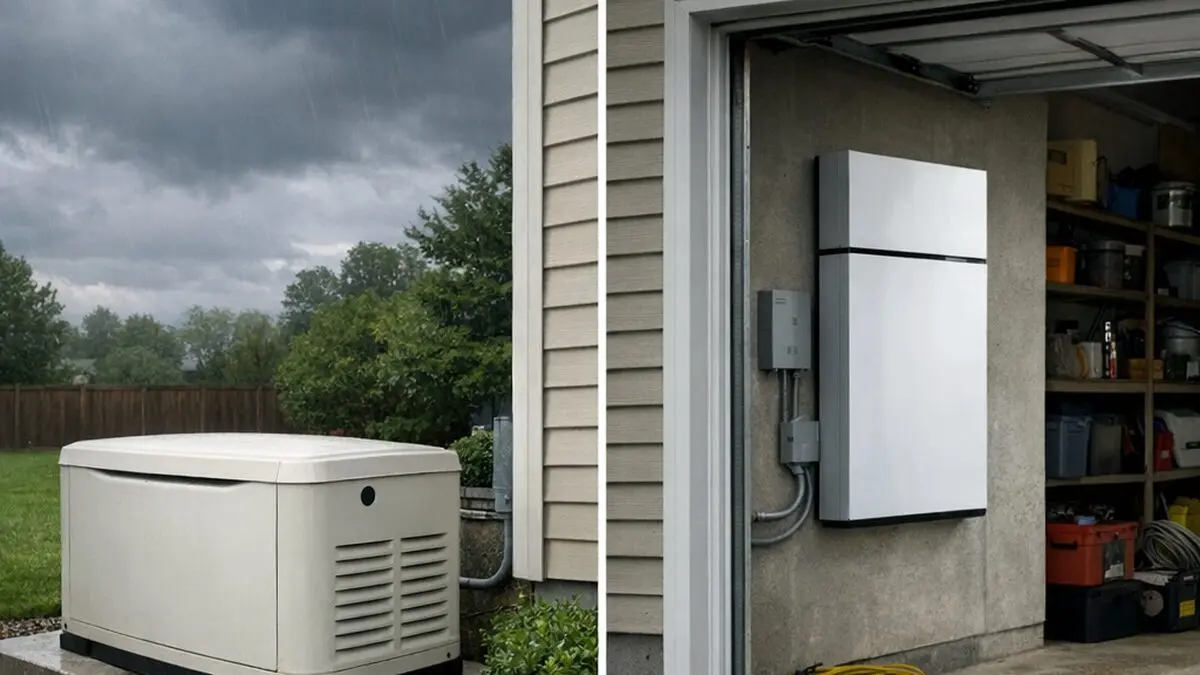
Reviewed by John Ihle, MN Master Electrician (AM005101) · NABCEP-credentialed · iSolar, Saint Paul Park, MN · Last reviewed October 2026
The short answer: A portable generator runs until its tank is empty, about 14 hours at half load on one common 3,650-watt model, then needs to cool before refueling. A natural gas standby generator can run for days, but Generac says to shut it down every 24 hours of continuous running to check the oil. Propane standby runtime depends on tank size.
How long can a generator run? The short answer
How long can a generator run? A portable generator runs until its tank is empty, often 10 to 14 hours at half load on common models, and then it has to be shut off, cooled and refueled. A home standby generator on natural gas has no tank to empty, so in theory it runs as long as the gas keeps flowing. In practice, oil is the limit: Generac tells owners to shut a standby unit down every 24 hours of continuous running to check the oil level.
So the real question isn't the generator's maximum. It's how long your fuel lasts, how often the engine needs attention, and what Minnesota cold does to both. Multi-day outages here tend to come with ice storms and subzero nights, which is exactly when runtime matters most.
Generator runtime by fuel type
Here's what manufacturers publish for two common setups, plus the propane math many rural Minnesota homes need. "Half load" is the honest planning number; few homes run a generator at 100% for long.
| Setup | Fuel supply | Published consumption or runtime | Practical runtime |
|---|---|---|---|
| Portable, 3,650 W dual fuel (Champion) | 4.7-gallon gas tank | About 14 hours at 50% load | One overnight, then refuel |
| Same portable on propane | 20-lb cylinder | About 10.5 hours at 50% load | Swap cylinders; keep spares filled |
| 26 kW standby on natural gas (Generac) | Utility gas line | 188 cu ft/hr at half load, 333 at full | Unlimited fuel; stop every 24 hours for oil check |
| 26 kW standby on propane (Generac) | 500-gal tank filled to about 80% (400 gal) | 2.06 gal/hr at half load, 3.63 at full | About 8 days at half load, about 4.5 days at full, less if the furnace shares the tank |
The propane row is our arithmetic: 400 gallons ÷ 2.06 gallons per hour is about 194 hours. Tanks are commonly filled to around 80% to leave room for expansion, and in winter your propane furnace and water heater draw from the same tank. Check your gauge before storm season, not during it.
How long can a generator run continuously?
How long a generator can run continuously depends on the type:
- Portable generators stop when the tank runs dry, and you should not top them off while hot. The Minnesota State Fire Marshal and the CPSC both warn to shut the engine off and let it cool before refueling, because gasoline spilled on a hot engine can ignite. In practice that means a planned shutdown every tank.
- Standby generators are built for long runs. Natural gas units have effectively unlimited fuel. Propane units are limited by the tank. Either way, the 24-hour oil check is the manufacturer's rule, not ours.
- Inverter generators are small and efficient at light loads, but tanks are small too. They're great for a fridge and a furnace fan, not a whole house.
Generator runtime also isn't the same as engine life. Every hour counts toward oil changes, air filters and spark plugs. Generac's schedule for its air-cooled standby units calls for more frequent oil changes, yearly or every 100 hours, for units run in extreme temperatures below 40°F, which covers most Minnesota winters. A four-day outage is about 96 hours: close to a full oil interval in one event. Our standby generator maintenance guide covers the full schedule.
What a multi-day Minnesota outage looks like
Here's a realistic plan for a three-day ice storm outage, based on how we see homeowners actually run their equipment.
With a portable generator
- Run essential loads only: furnace fan, sump pump, refrigerator, freezer, some lights.
- Expect to refuel two or three times a day at higher loads. Budget fuel: at roughly 4.7 gallons per 14 hours on the example unit, three days of round-the-clock running is about 24 gallons of gasoline. Store it in approved cans, away from the house and the furnace room.
- Check oil each time you refuel. Small portables hold very little oil, sometimes well under a quart, and low-oil shutdown sensors will stop the engine if it runs low.
- Keep it outdoors, far from doors, windows and vents. CO from portables kills people every winter.
With a standby generator
- Let it run. The automatic transfer switch handles the changeover.
- Every 24 hours, follow the shutdown steps in your manual and check the oil level.
- Keep snow and ice clear of the air intake and exhaust, and keep the path to the unit shoveled.
- After the outage, log the hours and schedule an oil change if you crossed the interval.
Cold-weather problems that shorten runs
- Stale or water-contaminated gasoline. Gas that sat in a can since summer can cause hard starts and stalls. Use stabilizer, rotate cans and keep them sealed.
- Propane in small cylinders. Propane vaporizes far below zero, but a small 20-lb tank chilled by heavy draw delivers less vapor. Output on propane is also lower: the example Champion unit drops from 3,650 to 3,285 running watts. See our dual fuel generator guide.
- Thick oil and weak batteries. Cold oil makes engines hard to crank, and starting batteries lose capacity in the cold. Standby units often benefit from a cold weather kit; ask your installer.
- Snow and drifting. A buried air intake starves the engine. Placement during installation matters more than people think.
- Overloading. Running near 100% burns fuel fastest and stresses the engine. Size the generator so your essential loads land around half its rating; our generator sizing tool does the math.
Natural gas standby units have one more consideration: they're thirsty. A 26 kW unit at full load uses about 333 cubic feet per hour, and adding that to your furnace and water heater can exceed what your gas meter and piping deliver. That's a planning item before installation; see our natural gas generator guide.
Stretching runtime when fuel is short
If the gas stations are dark or the propane truck can't get down your road, load management buys hours. Run the well pump and fill tubs and jugs, then shut it off. Keep the freezer closed; a full one holds for many hours. Let the house cool a few degrees at night instead of holding 70°F. Turn off the generator during the warmest, calmest part of the day if the house and pipes can coast. Every hour off is an hour of fuel saved.
Generator runtime vs a home battery
A battery's runtime works differently: it's capacity divided by load, and with solar it can recharge during the day. In a sunny outage, a solar battery can cycle indefinitely; under heavy December snow cover, it can't recharge much and a generator wins on endurance. Many Minnesota homes end up wanting both, and some batteries can coordinate with a standby generator. Our generator vs battery comparison lays out the trade-offs.
Plan your backup before the next storm
iSolar's electrical team installs standby generators, transfer switches and inlet-and-interlock setups for portables, all under our Minnesota electrical license. Start with our generator information page, or send us your essential-loads list and we'll size a system that covers a multi-day outage.
Sources
- Champion Power Equipment — 3650-Watt Dual Fuel Portable Generator (200972) specifications
- Generac — 26kW Standby Generator with Whole House Switch (model 7291) specifications
- Generac Support — Maintenance schedule for Generac home standby generators
- Minnesota State Fire Marshal and CPSC — Portable generator safety
- U.S. CPSC — Winter storm may knock out power; CPSC warns of deadly carbon monoxide and fire risks (2026)
Frequently asked.
How long can a portable generator run continuously?
Until the fuel tank runs dry, often 10 to 14 hours at half load on common models. Shut it off and let it cool before refueling, and check the oil every time you add fuel.
Can a standby generator run 24/7?
Yes, standby generators are designed for extended operation, but Generac instructs owners to shut the unit down every 24 hours of continuous running to check the oil level. Plan an oil change after long outages.
How long will a 500-gallon propane tank run a generator?
Filled to about 80%, a 500-gallon tank holds roughly 400 gallons. A 26 kW Generac uses about 2.06 gallons an hour at half load, so that's around 8 days, less if your furnace and water heater use the same tank.
Can I run a generator overnight?
Yes, if it's outdoors, well away from doors, windows and vents, and your home has working CO alarms. A portable needs enough fuel to last the night because you shouldn't refuel a hot engine.
Does cold weather affect generator runtime?
Yes. Cold makes engines harder to start, can reduce propane delivery from small cylinders, and pushes oil-change intervals shorter. Snow drifting over air intakes can also shut a unit down.
Is it bad to run a generator at full load?
It burns fuel fastest and works the engine hardest. Sizing a generator so your essential loads use about half its capacity gives longer runtime and more surge headroom for pumps and compressors.


Have a question we haven't covered?
Talk to a local iSolar expert — free, no pressure. Call (651) 565-1140.