
Rapid Shutdown Solar Rules: What NEC 690.12 Means on Your Roof
Panels make voltage whenever the sun is up. Rapid shutdown is the code rule that lets a firefighter make your roof safe with one switch.

Reviewed by John Ihle, MN Master Electrician (AM005101) · NABCEP-credentialed · iSolar, Saint Paul Park, MN · Last reviewed October 2026
The short answer: Rapid shutdown is the NEC 690.12 rule that lets firefighters de-energize rooftop solar with one switch. Within 30 seconds, conductors outside the array (beyond 1 foot of the panels) must drop to 30 volts or less, and conductors inside the array to 80 volts or less. Microinverters, optimizers or listed hazard-control systems provide it; the switch must be outside and readily accessible.
What rapid shutdown solar rules are for
Rapid shutdown solar rules exist for one reason: firefighters. Solar panels produce voltage whenever light hits them. Shutting off the main breaker stops power from the grid, but it doesn't stop a rooftop string of panels from holding several hundred volts DC in the wires running across your roof and down into your house. A firefighter cutting a ventilation hole or pulling a damaged wire shouldn't have to guess which conductors are live.
The National Electrical Code's answer is section 690.12, rapid shutdown of PV systems on buildings. It requires that when someone hits one clearly marked switch, the voltage on the system's conductors drops to a safe level within seconds. Installers often call it RSD solar. Every rooftop system we design in Minnesota includes it.
690.12 rapid shutdown in plain English
As Mike Holt summarizes the 2020 NEC version of 690.12, the rule draws an imaginary line called the array boundary, 1 foot outside the perimeter of the panels, and sets two limits:
- Outside the array boundary, or more than 3 feet inside the building from where conductors enter: limited to 30 volts within 30 seconds of rapid shutdown initiation.
- Inside the array boundary: limited to 80 volts within 30 seconds.
The inside-the-array limit took effect January 1, 2019, and the IAEI's review of the 2023 NEC notes that edition keeps the 80-volt requirement. The 2023 edition also recognizes a listed PV hazard control system, evaluated to UL 3741, as a compliance path; that standard lets certain combinations of modules, racking and electronics qualify as a tested system.
Minnesota adopted the 2026 NEC for electrical permits filed on or after August 17, 2026. The rapid shutdown requirement continues, but section numbers and details can shift between editions, so your designer works from the edition in force when the permit is filed. Our overview of Minnesota's electrical code covers the adoption.
The rapid shutdown switch on your house
The NEC calls it the initiation device. For one- and two-family dwellings, it must be located outside the building at a readily accessible location. Any one of these can serve:
- The service disconnect (often the main breaker in an outdoor meter-main).
- The PV system disconnect.
- A readily accessible switch that clearly shows "off" and "on."
Whatever is used, it's labeled so a firefighter can find it and know what it does. On most Twin Cities homes we install, that's the PV AC disconnect or the main service disconnect near the meter, with a permanent rapid shutdown label. Don't paint over it, hide it behind a fence or block it with a woodpile.
What homeowners should know about the switch
- Know where it is. Walk out and find it after installation, the same way you'd find your water shutoff.
- It's for emergencies and service. Flipping it stops solar production; it isn't a daily on-off control.
- Tell your installer if you move it. Siding projects, new decks and fences sometimes bury the switch. Relocating it is electrical work that needs a permit.
- Snow matters. In a Minnesota winter, keep a path to the switch the same as you would to your gas meter.
How Enphase, SolarEdge and others comply
| System type | How it meets rapid shutdown | What happens when you flip the switch |
|---|---|---|
| Enphase microinverters (IQ8) | UL-listed as PV rapid shutdown equipment; each panel's DC stays at the module | With grid power removed, microinverters stop producing; the only DC is one panel's voltage at each micro |
| SolarEdge string inverter with optimizers | Each optimizer drops to about 1 volt in safe mode | String voltage falls to roughly 1 V per optimizer; SolarEdge limits string length partly for this reason |
| String inverter with add-on module devices (e.g., Tigo TS4) | Module-level devices listed for rapid shutdown, plus a transmitter or controller | Controlled conductors drop to 30 V or less within 30 seconds |
| Listed PV hazard control system (UL 3741) | A tested combination of modules, racking and electronics | Meets the shock-hazard requirement as a certified system |
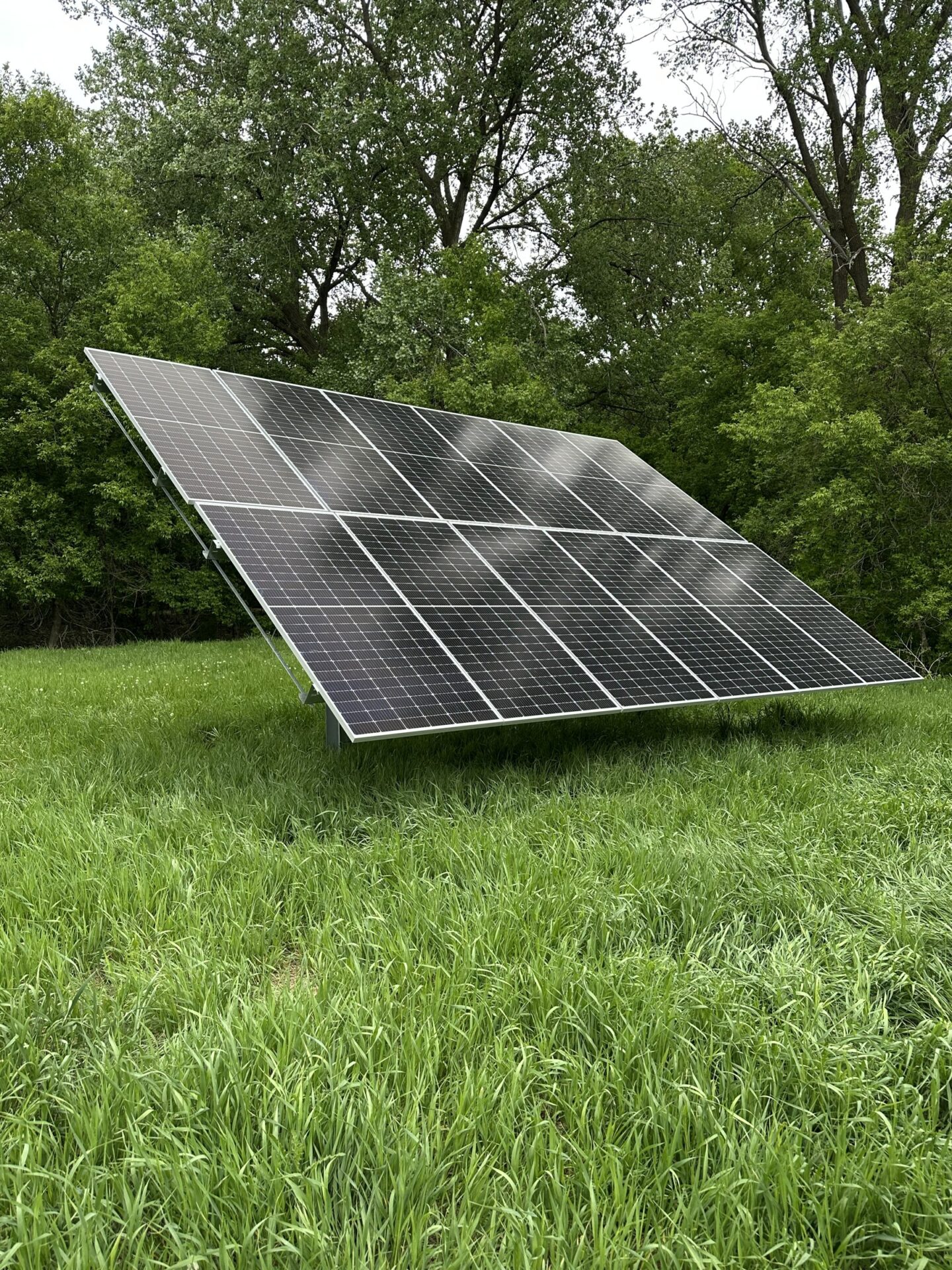
| Ground mount not on a building | 690.12 generally doesn't apply to the array itself | Conductors entering a building may still be covered |
Two details worth knowing. Enphase's IQ8 datasheet lists conformance with 690.12 for both AC and DC conductors when installed per its instructions. SolarEdge's optimizer datasheet notes that a string of more than 30 optimizers would exceed 30 volts in safe mode and wouldn't meet rapid shutdown. That's one reason string design rules matter; see how solar panels are wired and how optimizers work.
Batteries add a layer. Tesla, for example, includes a Solar Shutdown Device in its Powerwall product family, and its U.S. warranty lists it separately with a 25-year term. Whatever the brand, the rapid shutdown design has to cover the solar circuits feeding a hybrid inverter or battery, not just a simple grid-tied string.
What inspectors look for
When a Minnesota electrical inspector checks a rooftop PV system, rapid shutdown items commonly on the list include:
- Listed equipment that matches the plan set. The module-level electronics, inverter and modules should be the models shown, and compatible with each other per the listing.
- Initiation device location. Outside, readily accessible and clearly labeled.
- Labels at the service and disconnects. Rapid shutdown and source labels that tell responders what they're looking at. The newest code adds directory requirements for power sources not located at the service disconnect.
- Conductor routing. DC conductors outside the array boundary limited and routed as the design assumes.
- String counts and configuration for optimizer systems, consistent with the manufacturer's limits.
- A functional test, where required: flip the switch and confirm the system behaves as it should.
Getting these right the first time keeps a job from failing inspection and adding a week to the timeline.
Older systems, add-ons and DIY kits
Systems installed before rapid shutdown rules were adopted generally don't have to be retrofitted just because the code changed. But adding panels or replacing an inverter is new work under the current code, and the new portion must comply. That can rule out "just add a few more panels to the old string." If you're expanding an older system, budget for module-level electronics on the new array.
Online DIY kits sometimes skip rapid shutdown entirely because they're sold for ground mounts, sheds or off-grid use. Mount the same kit on your house and it needs a compliant design, a permit and, in Minnesota, a licensed electrical contractor. Our ground mount vs roof mount guide covers the trade-offs of keeping an array off the house.
Rapid shutdown on every iSolar rooftop
We design every roof-mounted system with listed rapid shutdown equipment and clear labeling, reviewed under master electrician John Ihle's license. See how we install, or request a quote and we'll show you where your rapid shutdown switch will go before the first panel is set.
Sources
- Mike Holt Enterprises — 2020 NEC 690.12 Rapid shutdown of PV systems on buildings (PDF excerpt)
- IAEI Magazine — NEC rapid shutdown requirements and UL 3741 (Joseph A. Kraft, 2023)
- Enphase — IQ8 Series Microinverters data sheet (US)
- SolarEdge — Power Optimizer S-Series datasheet (North America)
- Tesla — Powerwall Limited Warranty (USA), including Solar Shutdown Device
- Minnesota Department of Labor and Industry — 2026 National Electrical Code adoption
Frequently asked.
What is rapid shutdown on a solar system?
It's a code-required function that drops the voltage on rooftop PV conductors to safe levels within 30 seconds of someone flipping a designated switch. It protects firefighters working on or under the roof.
Where is the rapid shutdown switch?
On a one- or two-family home it must be outside at a readily accessible location. It's often the PV system disconnect or the main service disconnect, marked with a rapid shutdown label.
Do microinverters meet rapid shutdown?
Yes. Enphase lists its IQ8 microinverters as PV rapid shutdown equipment conforming to NEC 690.12 for AC and DC conductors when installed per its instructions.
Do ground-mounted solar panels need rapid shutdown?
Rapid shutdown applies to PV systems on or in buildings, so an array mounted on the ground away from the house generally isn't covered. Conductors that run into a building can still be subject to requirements.
Is rapid shutdown required in Minnesota?
Yes. Minnesota enforces the National Electrical Code, and adopted the 2026 edition for permits filed on or after August 17, 2026. Rooftop systems must include rapid shutdown.
Do I need to upgrade an old solar system for rapid shutdown?
Generally not just because the code changed. But adding panels or replacing equipment is new work, and the new portion must meet the current rapid shutdown rules.

Have a question we haven't covered?
Talk to a local iSolar expert — free, no pressure. Call (651) 565-1140.