
How to Become a Solar Installer in Minnesota
Minnesota has no separate solar installer license. Solar is electrical work, so the career runs through DLI's licensing system. Here's how people actually get in.
Reviewed by John Ihle, MN Master Electrician (AM005101) · NABCEP-credentialed · iSolar, Saint Paul Park, MN · Last reviewed October 2026
The short answer: In Minnesota, solar PV must be installed by a licensed electrical contractor, so you become a solar installer by getting hired by one, starting as a crew member or registering with DLI as an unlicensed electrician ($14) and logging hours toward a journeyworker license (48 months). NABCEP certification is voluntary but respected. National median pay for PV installers is $25.55 an hour.
How to become a solar installer in Minnesota: the short version
How to become a solar installer in Minnesota starts with one fact most online guides skip: there is no separate state "solar installer" license here. The Minnesota Department of Labor and Industry (DLI) says the actual installation of a solar PV system must be performed by a Minnesota-licensed electrical contractor. So the career runs through the electrical licensing system. You get hired by a company that holds that license, you register with DLI if you'll be doing electrical work, and you build hours and skills from there.
That's good news if you're starting out. You don't need a degree or an expensive certificate to get hired. You need to show up, work safely on a roof in all weather, and want to learn. The long-term ceiling is set by whether you pursue an electrical license.
Three entry routes into solar work
1. Crew member or installer helper
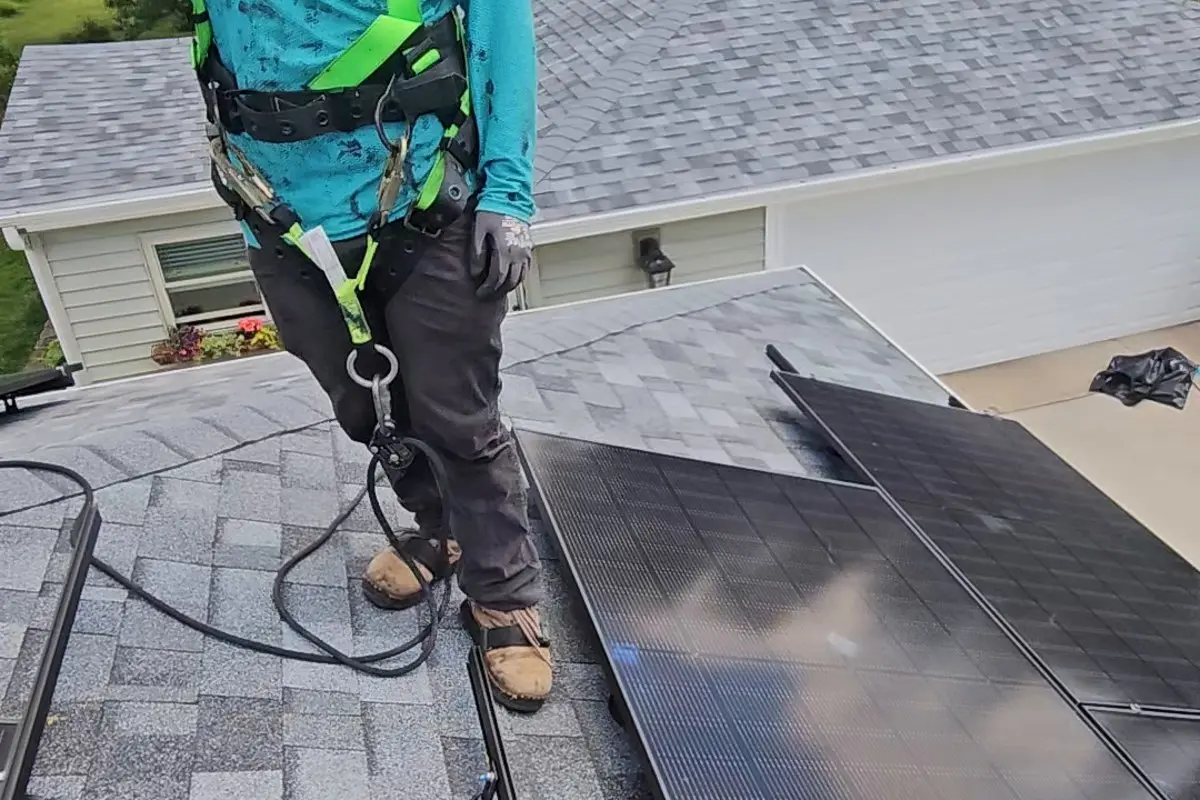
Most people start by carrying panels, setting racking, running conduit and learning the job site. Ask each employer how it divides tasks between electrical and non-electrical crew members, because electrical work in Minnesota has to be done by licensed electricians or registered workers under a licensed contractor's supervision. Expect early mornings, ladders, harnesses and Minnesota weather; residential installs commonly take one to two days on site, so you'll see a lot of roofs.
2. Registered unlicensed electrician (the apprentice path)
If you want to do the wiring, register with DLI as an unlicensed electrician, which costs $14, and start logging hours under a licensed employer. DLI requires at least 48 months of qualifying experience, including 24 months of wiring, before you can sit for the journeyworker exam, and 60 months for a master license. Solar, battery and EV work counts as real electrical experience. Our guide on how to become an electrician in Minnesota walks through registration, apprenticeship programs and exams step by step.
3. Transfer from a related trade
Roofers, electricians from other states, HVAC techs and military veterans with electrical backgrounds often move into solar. Roofers bring the hardest-to-teach skill: working safely on a pitched roof and keeping it watertight. Electricians from other states need to check how Minnesota credits their out-of-state experience before they assume a license transfers.
What your first year actually looks like
Minnesota solar work is seasonal in rhythm but not seasonal in employment, at least at companies that also do electrical service. Here's what a new crew member typically learns in the first twelve months:
- Roof safety and fall protection. Harness, anchors and ladder setup come before anything else, every day.
- Attachments and flashing. Finding rafters, sealing every penetration and keeping the roof warranty intact. Leaks are the mistake customers remember.
- Racking and module handling. Torque values, wire management under the array and handling glass without cracking it.
- Conduit and wire. Bending EMT, pulling conductors, labeling, and reading the plan set's single-line diagram.
- Testing and commissioning. Using a meter safely on DC circuits and checking polarity and voltage before anything is energized.
Winter brings different work: snow-season service calls, battery and EV charger installs, panel upgrades, and detach-and-reset jobs when a roof is replaced. People who learn the electrical side stay busy year-round; people who only set racking can find the off-season thinner.
Licensing realities under DLI
| Role | Minnesota requirement | What it lets you do on a solar job |
|---|---|---|
| Crew member / helper | Hired by the company; no state license | Work the employer assigns that isn't electrical work |
| Registered unlicensed electrician | DLI registration ($14), employed by a licensed contractor | Electrical work under licensed supervision; hours count toward a license |
| Journeyworker electrician | 48 months of experience (24 in wiring) plus exam | Electrical work for a licensed contractor; supervise registered workers |
| Master electrician | 60 months of experience plus exam | Can serve as a contractor's responsible licensed master |
| NABCEP certification | Voluntary, industry-run | A recognized solar credential; no added legal authority in Minnesota |
The difference between journeyworker and master matters most to companies: every licensed electrical contractor must have a responsible licensed master. Our journeyman vs master electrician post explains that structure.
Is NABCEP certification worth it?
The North American Board of Certified Energy Practitioners (NABCEP) runs the best-known solar certifications in the country. Its PV Associate credential is an entry-level exam that shows you understand PV fundamentals; its references include the NEC and NABCEP's installation resource guide. The professional-level PV Installation Professional certification is for experienced installers and requires documented installation experience; check NABCEP's site for current prerequisites and fees.
In Minnesota, NABCEP doesn't replace an electrical license, and the license is what the law requires. But it's respected by employers, it signals you know the code side of solar, and many installers add it on top of the state license. Our master electrician, John Ihle, holds a NABCEP credential alongside his Minnesota master license.
If you want to learn the technical fundamentals before or alongside a certificate, start with how strings are designed for cold weather in our post on how solar panels are wired, and the code edition Minnesota now enforces in Minnesota's electrical code.
How much does a solar installer make?
National wage data puts entry-level solar work below licensed electrical pay, and the gap is the strongest argument for pursuing a license:
- Solar photovoltaic installers: national median of $25.55 an hour, or $53,140 a year, per 2025 Bureau of Labor Statistics data reported by O*NET.
- Electricians in Minnesota: a median of $37.58 an hour in May 2025, per the BLS.
Those are different occupation categories. A solar crew member without electrical credentials sits closer to the first number; a licensed journeyworker doing solar sits in the second. Pay varies by employer, overtime, travel to greater Minnesota jobs and whether the work is residential or commercial.
Starting a solar installation company in Minnesota
Some people search this topic because they want to start their own company. In Minnesota, that requires more than installation skill:
- An electrical contractor license with a responsible licensed master electrician, plus the bond and insurance DLI requires.
- A residential building contractor or remodeler license if you contract with homeowners. DLI says a law effective July 1, 2023 requires this for companies installing solar on homes, which gives homeowners access to the Contractor Recovery Fund.
- Permitting and utility knowledge: local permits, electrical inspections, and Xcel or co-op interconnection.
- A warranty and service plan that outlives any single job.
Many sales-only companies subcontract the installation to licensed electrical contractors, which the law allows. Homeowners should know who will actually be on the roof.
Working in solar at iSolar
iSolar runs in-house residential crews under Minnesota electrical contractor license EA761814, and our work spans solar, batteries, EV chargers, generators and service upgrades. If you're interested in learning the trade with a licensed contractor, see our careers page or meet the people you'd work with on our team page.
Sources
- Minnesota Department of Labor and Industry — Solar installer licensing requirement
- Minnesota DLI — Experience requirements for an electrical license
- Minnesota DLI — Registered unlicensed electricians
- O*NET OnLine (BLS OEWS 2025 data) — Solar Photovoltaic Installers, 47-2231.00 wages
- U.S. Bureau of Labor Statistics — Occupational Employment and Wages, Electricians (47-2111)
- NABCEP — PV Associate
Frequently asked.
Do you need a license to install solar panels in Minnesota?
The company does. Minnesota DLI says solar PV installation must be performed by a Minnesota-licensed electrical contractor. Workers doing electrical tasks must be licensed electricians or registered unlicensed electricians under supervision.
How long does it take to become a solar installer?
You can start on a crew right away. Becoming a licensed journeyworker electrician, which lets you do the electrical side on your own, takes at least 48 months of qualifying experience plus an exam.
How much does a solar installer make?
BLS data reported by O*NET puts the 2025 national median for solar photovoltaic installers at $25.55 an hour, or $53,140 a year. Licensed electricians in Minnesota earned a median $37.58 an hour in May 2025.
Is NABCEP certification required in Minnesota?
No. NABCEP certification is voluntary and doesn't replace an electrical license, but employers respect it and many installers add it on top of their state license.
Can I start a solar company without being an electrician?
You can sell solar if you hold a residential building contractor or remodeler license, but the installation itself must be performed by a licensed electrical contractor, often as a subcontractor.
Is solar installation a good career?
It's steady, physical work with a clear path to higher pay through electrical licensing. Expect roof work in all seasons, and plan to pursue a journeyworker license if you want the best long-term earnings.


Have a question we haven't covered?
Talk to a local iSolar expert — free, no pressure. Call (651) 565-1140.