
Solar Panel Cleaning and Maintenance in Minnesota: What Actually Needs Doing
Rain and snow do most of the cleaning in Minnesota. Here is when washing is worth it, how to do it safely, and the short yearly checklist that keeps a system healthy.
Reviewed by John Ihle, MN Master Electrician (AM005101) · NABCEP-credentialed · iSolar, Saint Paul Park, MN · Last reviewed October 2026
The short answer: Most Minnesota solar panels do not need routine cleaning because rain and sliding snow rinse them. Clean only when you see grime and clear-day production is noticeably below last year, using a hose and soft brush from the ground, never a pressure washer. Maintenance matters more: check monitoring monthly, look for damage and critters each spring and fall, and get a professional electrical check every few years.
The short answer: Minnesota weather does most of the cleaning
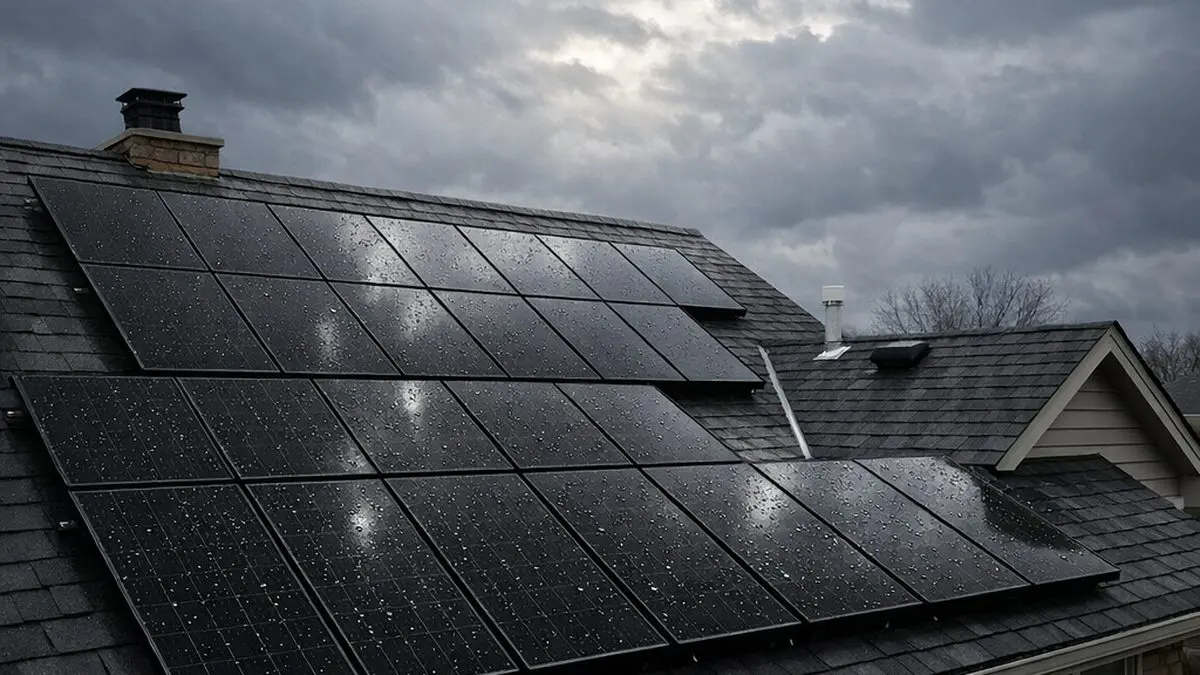
Most Minnesota homeowners never need to wash their solar panels. Our summer thunderstorms rinse the glass, and in winter, snow sliding off the array scrubs it on the way down. Residential arrays sit on pitched roofs, so water and dirt run off rather than pooling.
That does not mean panels never get dirty. Research from the National Renewable Energy Laboratory on solar plants in North Carolina found that heavy pollen cut performance by as much as 15 percent at the peak of pollen season, and that rain alone did not fully wash it off. Those plants had gone more than seven years without manual cleaning, in a region with heavy pine and oak pollen. The lesson is not that every array needs washing. It is that you should watch your production and clean only when the data says it is worth it.
Maintenance, on the other hand, is not optional. A solar system is electrical equipment on your roof for 25 years or more, and a little attention each year catches problems early.
When cleaning is actually worth it
In our experience, these are the Minnesota situations where a cleaning pays off:
- Low-tilt or flat arrays on garages, porches or commercial roofs, where rain does not run off as fast.
- Homes near gravel roads, farm fields or construction, where dust settles on the glass through dry stretches.
- Bird droppings, common at lake cabins and under roosting spots. Droppings block light on individual cells and do not wash off easily.
- Heavy tree debris, such as sap, seed fluff or pollen from trees overhanging the roof.
- Ground mounts that get splashed with mud or dusted by mowing.
A simple rule: if you can see grime on the glass from the ground and your production on clear days is noticeably below the same month last year, it is worth a cleaning. If the glass looks dusty but production is normal, let the next rain handle it.
How to clean solar panels safely
The safest cleaning is the one done from the ground. Panel manufacturers publish cleaning instructions, and REC's guidance is typical of the industry:
- Use water first. Plain water at ambient temperature, ideally deionized or rainwater, removes most dirt. Tap water works but can leave spots in hard-water areas.
- Use soft tools only. A soft sponge, microfiber cloth or soft, non-abrasive brush on an extension pole. Never use metal scrapers, scouring pads or blades.
- No pressure washers or steam cleaners. A garden hose at normal household pressure is fine. High pressure can damage seals and glass and can void the warranty.
- Go easy on soap. If marks remain, a mild, biodegradable dish soap, rinsed off right away. No acidic or alkaline cleaners.
- Clean early in the morning. Cold water on a hot panel can crack the glass from thermal shock.
- Never stand, walk or lean on panels, and do not work at height without fall protection.
In winter, leave the snow alone. Raking snow off panels risks scratching the glass and falling off the roof, and the panels shed it on their own. Our guide to snow on solar panels explains why.
If your array is on a steep or two-story roof, hire someone. A cleaning is not worth a fall.
Questions to ask a cleaning service
- Are you insured, and do your crews use fall protection on the roof?
- Do you clean with a water-fed pole and purified water rather than pressure washers or chemicals?
- Will anyone stand or kneel on the panels? (The answer should be no.)
- Will you photograph the array before and after, and tell me about any cracked glass, loose wiring or nests you find?
A cleaning crew is not an electrical inspection. If they spot damage or chewed wiring, have a licensed solar electrician look at it before anyone touches the wiring.
Your annual solar maintenance checklist
Here is what we recommend Minnesota owners check, and who should check it. Most items take a few minutes from the ground or in your app.
| What to check | What you are looking for | Who | When |
|---|---|---|---|
| Monitoring app | Production vs. the same month last year; any panel or string reading low or zero | You | Monthly |
| Array from the ground (binoculars) | Cracked glass, debris, droppings, loose or hanging wires | You | Spring after snowmelt, and fall |
| Under the array edges | Nest material, chewed wire, squirrels or birds going in and out | You (from the ground) | Spring and fall |
| Gutters below the array | Leaves, nest debris, damage from sliding snow | You | Fall |
| Trees near the roof | New shading, branches within reach of the array | You | Yearly |
| Inverter, disconnects, meter area | Status lights, error codes, damaged labels, blocked vents | You | Quarterly |
| Connectors, wiring, grounding, racking | Loose connections, heat discoloration, corrosion, worn wire | Licensed solar electrician | Every few years, or after major storms |
| Roof attachments and flashing | Leaks, lifted shingles, sealant condition | Solar installer or roofer | Every few years, and before any reroof |
After a major hailstorm or windstorm, add a post-storm check. Our guide to solar panels and hail in Minnesota covers what to look for.
Monitoring: your best maintenance tool
Your monitoring app does most of the inspection work for you, if you look at it. A few habits make it useful:
- Turn on alerts. Most platforms can email or push a notification when production drops or a device goes offline.
- Compare like with like. Compare this June to last June, not June to January. Minnesota production swings widely by season.
- Look at panel-level data if your system has it. One panel far below its neighbors on a clear day is a fault, not weather.
- Do not panic over a blank screen. Zero data usually means the gateway lost Wi-Fi, not that the system stopped. Our offline monitoring guide walks through the fixes.
Expect a slow decline over time. Quality panels typically lose about 0.25 to 0.5 percent of output per year, so a small year-over-year dip is normal. A sudden drop is not.
Critter checks
In wooded neighborhoods, squirrels and birds are a bigger maintenance issue than dirt. Animals nest in the gap under the array and chew the wiring, which can cut production and trigger ground faults. Signs include leaves poking out from the panel edges, debris in the gutter below the array, and chewed wire on the ground.
If you see activity, do not reach under the panels yourself. They are energized whenever the sun is up. Our guide to squirrels under solar panels covers removal, and our critter guard service seals the array perimeter with mesh so animals stay out.
What maintenance costs, and what warranties cover
Routine maintenance on a residential system is mostly your time. Professional service is typically billed per visit, with repairs quoted separately. Cleaning is considered routine care, not a warranty item.
Warranties cover failures. Panel manufacturers cover defects and power output for 25 to 30 years, and installs we complete also come with a SolarInsure 30-year warranty covering parts, labor, roof penetrations and monitoring through a third-party, insurer-backed provider. It is transferable if you sell. Details are on our SolarInsure warranty page.
Keep a simple folder with your permit, inspection sign-off, equipment list, warranty documents and a few photos of the array each year. It makes any future claim, sale or detach-and-reset much easier.
Book an inspection or repair
If your production has dropped, you see damage or animal activity, or it has simply been a few years since anyone looked closely, we can help. Our master electrician-led team services and repairs any brand of system across the Twin Cities and greater Minnesota. Start with solar panel repair and service or call (651) 565-1140.
Sources
Frequently asked.
Do solar panels need to be cleaned in Minnesota?
Usually not. Rain and snow sliding off the glass keep most pitched-roof arrays clean enough. Cleaning makes sense for low-tilt arrays, homes near dusty roads or fields, or panels with bird droppings, and only when production shows a real drop.
How often should solar panels be cleaned?
There is no fixed schedule. Watch your monitoring app and clean only when clear-day production falls noticeably below the same month last year and you can see dirt on the glass. Many Minnesota homeowners never clean their panels.
Can I use a pressure washer on solar panels?
No. Panel manufacturers prohibit pressure washers and steam cleaners because they can damage seals and glass and void the warranty. A garden hose at normal pressure and a soft brush are all you need.
What is the best time of day to clean solar panels?
Early morning, before the panels heat up. Cold water on hot glass can cause thermal shock and crack the panel, which manufacturers specifically warn against.
How much does solar panel maintenance cost?
Most routine maintenance is just your time checking the monitoring app and looking at the array from the ground. Professional inspections and cleanings are typically billed per visit, and repairs are quoted separately.
Should I remove snow from my solar panels?
No. Raking snow off panels can scratch the glass, damage frames and put you at risk of falling. Panels shed snow on their own, and winter is a small share of annual production.
What should a solar inspection include?
A good inspection checks production data, the glass and frames, connectors and wiring under the array, grounding and racking, roof attachments and flashing, and signs of animal activity. It should end with a written summary and photos.


Have a question we haven't covered?
Talk to a local iSolar expert — free, no pressure. Call (651) 565-1140.